
2027 Distinguished Scientist/Lecturer: David Eddie, PhD, ABPP
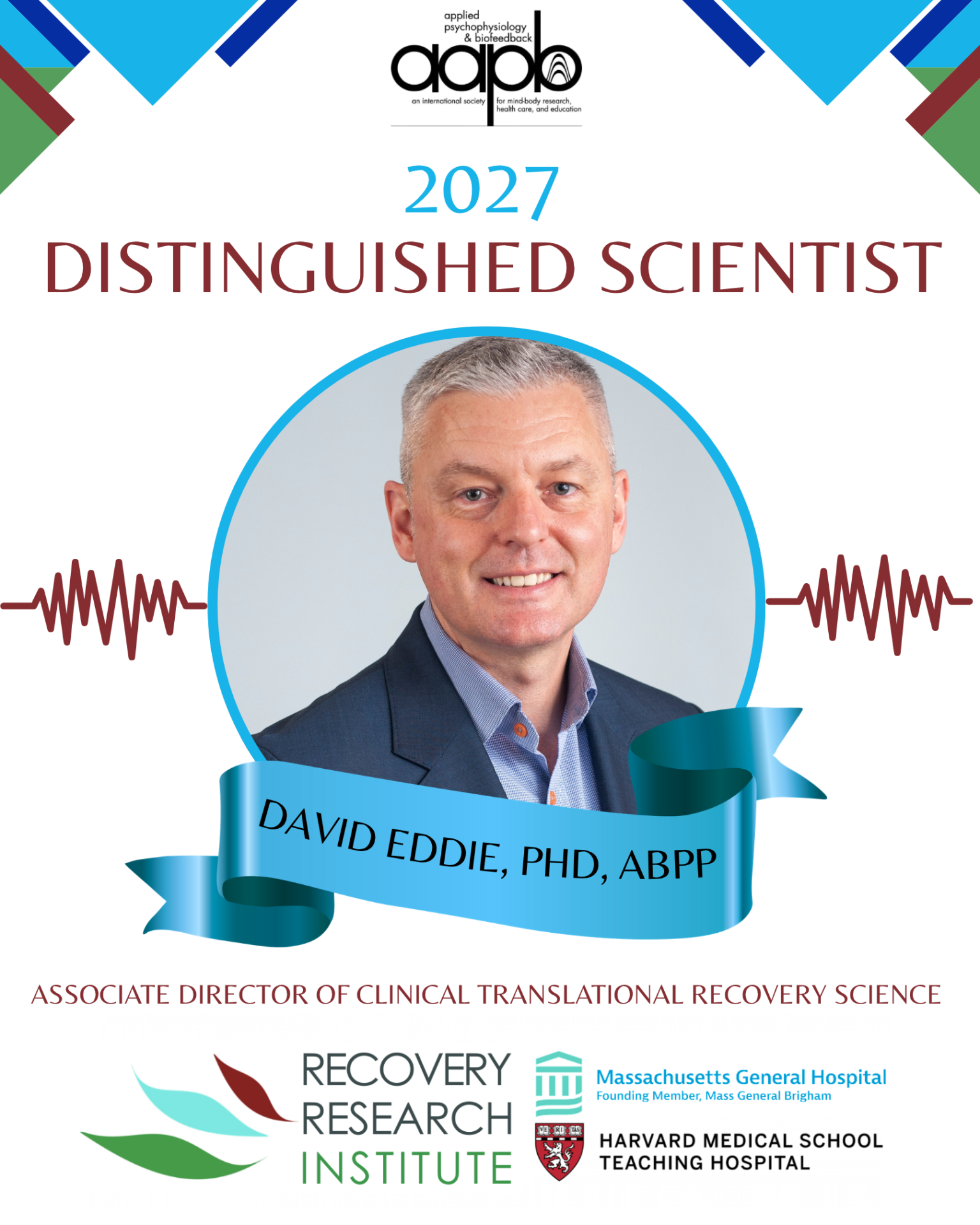
The AAPB Distinguished Scientist Award is presented annually in recognition of an outstanding career and scientific contributions to the field of applied psychophysiology and biofeedback. This award recognizes a scientist who has advanced biofeedback through a significant body of research, as evidenced by publications, awards, and peer review, and has made a major impact on the field of study, nationally and/or internationally. Nominees must hold a doctoral degree in psychology, biomedical science, medicine, or other health-related fields. Recipients are selected based on the following evaluation criteria:
- Scientific importance of research discoveries;
- mentorship of students, postdoctoral fellows, and new faculty;
- continued impact on the field.
Each year, the AAPB Distinguished Scientist presents the closing keynote session at AAPB's Annual Scientific Meeting.
ABOUT OUR 2027 DISTINGUISHED SCIENTIST
David Eddie, PhD, ABPP
Dr. David Eddie is the Associate Director of Clinical Translational Recovery Science at Massachusetts General Hospital's Recovery Research Institute and Center for Addiction Medicine, a clinical psychologist in Massachusetts General Hospital's Department of Psychiatry, an assistant professor at Harvard Medical School, and a diplomate of the American Board of Addiction Psychology. His research seeks to better understand the psychological and psychophysiological causes and conditions that lead to people becoming addicted to alcohol and other drugs, and how these factors can also maintain addiction. He uses this knowledge to develop and study novel treatments for substance use disorder.
His recent NIAAA- and NIDA-funded research projects include:
1) A study seeking to better understand affective and psychophysiological factors that heighten addiction relapse risk with the aim of developing cutting-edge, mobile health (mHealth) interventions driven by wearable biosensors.
2) A project assessing the efficacy of a novel mutual-help addiction recovery program based on physical activity known as The Phoenix.
3) A randomized controlled trial of heart rate variability biofeedback for substance use disorder utilizing wearable biosensors.
