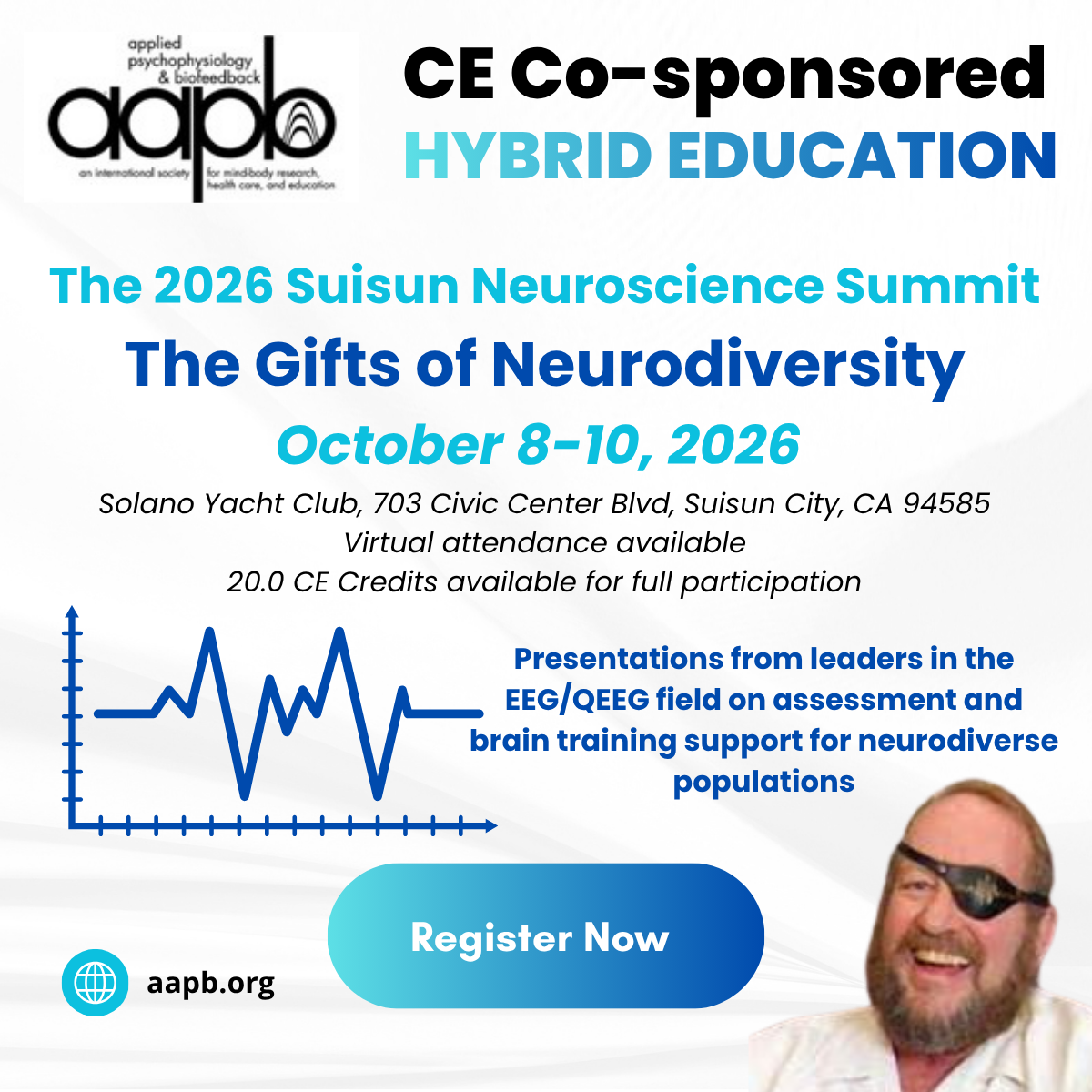
For decades, Jay Gunkelman has been the true north for quantitative EEG, guiding countless practitioners through the noise and toward clinical precision. This year, we dedicate our Summit to his enduring legacy. Jay’s foundational work reminds us that every brain’s unique rhythm has a story to tell—a perfect prelude to our 2026 theme, The Gifts of Neurodiversity. Join us as we celebrate the Godfather of qEEG, his continued generosity to the field, and his unwavering commitment to the next generation of neuroscience professionals.
This year’s theme is “The Gifts of Neurodiversity,” featuring presentations from leaders in the EEG/QEEG universe on assessment and brain training support for neurodiverse populations. For decades, clinical models have leaned heavily on identifying deficits—focusing on what a brain can’t do. But brains that don’t fit the mold are often where the most profound adaptations, creativity, and resilience reside. “The Gifts of Neurodiversity” isn’t a marketing slogan; it is a shift in scientific perspective. This year, we are exploring the mechanics of the divergent brain to understand its inherent strengths, while acknowledging the very real need for precise, compassionate clinical support. We are bringing together lived experiences and rigorous science to build protocols that respect complexity. No hype, no fog—just honest data and tools built for real humans.
EVENT CONTACT
DATES
October 8-10, 2026
LOCATION
In person: Solano Yacht Club. 703 Civic Center Blvd, Suisun City, CA 94585
Virtual: Virtual only registration is available
SCHEDULE OF EVENTS
WEDNESDAY, October 7, 2026
6 pm – 9 pm
Welcome Reception
THURSDAY, October 8, 2026 – DAY 1
8:45 – 10:15 am
Opening Keynote Speaker: The Gift of Neurodiversity- QEEG, Hypermirroring, and Brain-Based Clinical Insights | Theresia Stoeckl-Drax, MD - Pediatrician, Developmental Neurologist
1.5 CE Credits
Session Description: Brain- and EEG-based diagnostics in the clinical field of neurodiversity strongly support the view that every individual shows a unique neurofunctional profile. While recognizable patterns exist— such as ADHD, Autism Spectrum, or Dyslexia, considerable individual differences appear even when examining basic wave distribution and functional connectivity. This keynote will introduce the hypermirroring brain as an example of a distinct activation and communication pattern observed in emotionally gifted and highly empathetic children. Clinical observations, behavioral characteristics, and QEEG signatures will be presented. This subgroup of highly sensitive and emotionally responsive individuals often shows hypersensitivity, hypermirroring, and giftedness—traits that are crucial for today’s rapidly changing and socially complex world and must be recognized, protected, and valued. Neurodiversity can be expressed in both positive and pathological forms. Pathological neurodiversity may arise from intoxication, inflammation, head injury, trauma, or other adverse conditions. In such cases, brain-based diagnostics can clarify where the healing process needs to begin and can guide therapeutic interventions. The concept of neurodiversity emphasizes strengths, abilities, and adaptive potentials instead of focusing primarily on deficits. Recognizing and supporting these strengths—both in children and adults—is essential to help individuals reach their potential and contribute meaningfully to society, especially in times of uncertainty, transition, and emerging challenges.
Level: Intermediate
Learning Objectives:
-
-
- Describe characteristic QEEG patterns associated with neurodiverse brain functioning
- Differentiate adaptive neurodiversity from pathological dysregulation using clinical and neurophysiological indicators
- Analyze the hypermirroring brain, including behavioral features and mu-rhythm correlates
- Apply QEEG-informed insights to guide individualized neurofeedback and therapeutic strategies
-
Target Audience: Clinicians, psychologists, neurofeedback practitioners, educators, and researchers working with neurodevelopmental conditions (e.g., ADHD, autism, learning disorders), as well as professionals interested in QEEG-based diagnostics and individualized, brain-based interventions.
Risks/Utility/Validity: Materials that are included in this course may include interventions and modalities that are beyond the authorized practice of mental health professionals. As a licensed professional, you are responsible for reviewing the scope of practice, including activities that are defined in law as beyond the boundaries of practice in accordance with and in compliance with your profession’s standards.
Limitations include variability in QEEG interpretation and the requirement for clinician expertise. Neurofeedback and related interventions should be applied within appropriate professional scope. There is a risk of oversimplifying neurodiversity as purely adaptive, which may delay necessary clinical intervention. Current evidence supports neurofeedback in conditions such as ADHD, although individual responses may vary.
Focus: 70% Clinical/30% Research
Presented by: Dr. Theresia Maria Stoeckl-Drax is a pediatrician and developmental neurologist from Munich, Germany, specializing in neurodiversity, QEEG-based diagnostics, and neurofeedback. She is the founder of the Pediatric Developmental Institute in Gauting, where she integrates 19- channel QEEG, neuromodulation, and Brainspotting to assess and treat attention, learning, emotional, and early developmental trauma patterns in children and young adults. Her scientific work focuses on emotionally gifted and hypermirroring children, the EEG signature of empathy, and brain-based approaches to developmental medicine. She has chaired international symposia on hypermirroring and published in the International Journal of Psychophysiology, NeuroRegulation, and clinical neurotherapy handbooks. Her clinical and research work emphasizes recognizing neurodiversity as strength, supporting children and families in unfolding their potential.
Disclosure: This presenter has no financial interest to disclose.
10:15 – 10:30 AM
Break
10:30 – 12:00 PM
Putting the Seeking Brain First: qEEG Guided NFB in ASD | Robin Bernhard, LCSW, M ED, Co-Owner of the Virginia Center for Neurofeedback, Attachment and Trauma; Neil Hughes, MFA, Founder N-SCP; Jay Gunkelman, QEEGD Emeritus
1.5 CE Credits
Session Description: Enjoy new language and a fresh perspective from Neil Hughes, a savant with ASD, who discovered himself through QEEG-guided neurofeedback. Neurofeedback freed him from pathologizing diagnoses and inappropriate treatment. Neuromarkers and SMR neurofeedback training unlocked a neutral framework for his understanding of ASD, FND and cPTSD symptoms leading Neil into a new sense of self, with increased verbal expression. The world is split on ASD--is it a form of diversity or is it disease. Neil will explain how it is both and neither. Robin Bernhard will Jay Gunkelman will review pre- and post- QEEG findings, illustrating measurable shifts that accompanied Neil’s transformation.
Level: Intermediate
Learning Objectives:
-
-
- Define how a diagnosis of autism spectrum disorder is different from behaving autistic and being Autistic? Explain why non-pathologizing language is needed to describe autistic behavior and Autistic people
- Describe the meaning of "Putting the Seeking Brain First." Summarize what a neurologic approach to sensory integration looks like using the seven primary affects from Jaak Panksepp's work: SEEKING, CARE, SOCIAL JOY, FEAR, PANIC/GRIEF, and RAGE
- Describe how does Panksepp’s approach aids our understanding of the Burnout Cycle: Sensory Overstimulation and Emotional Overwhelm culminating in Rage and Burnout
- List the characteristics that distinguish between autistic rage vs normal rage and autistic burnout vs normal burnout
- Identify three neuromarkers for autism seen in the EEG, and discuss the symptoms associated with those neuromarkers
- Describe the difference between the neural pathways for future memory vs traumatic memory
-
Target Audience: Everyone interested in updating knowledge about ASD, those who want to increase their understanding of neuromarkers and how these are reflected in the EEG. Best for neurofeedback providers and students of neurofeedback, but credentials are not required to enjoy the presentation.
Risks/Utility/Validity: Materials that are included in this course may include interventions and modalities that are beyond the authorized practice of mental health professionals. As a licensed professional, you are responsible for reviewing the scope of practice, including activities that are defined in law as beyond the boundaries of practice in accordance with and in compliance with your profession’s standards.
This presentation uses the CNC 1020 from Brownback and Mason to assist in symptom tracking.
Focus: 100% Clinical
Presented by:
Robin Bernhard has over 40 years of experience in private practice. Her client centered approach synthesizes multiple modalities including transpersonal psychology and systems theories with QEEG -guided SMR neurofeedback training. Robin’s work is rooted in a lifelong exploration of empathy, consciousness, and the subtle signals that exist beneath words. Long before she had professional language for what she sensed, her earliest teachers were her companion dogs and horses. Through these unconditional relationships, she developed refined non-verbal communication skills—an attunement to rhythm, breath, posture, and felt sense – and deep respect for the yet to be understood phenomenon of non-local communication. This early experience of finding calm and connection in relationship became the thread that later wove through her psychotherapy, neurofeedback and meditation training.
Disclosure: This presenter has no financial interest to disclose.
Neil is a savant with autism. In 2021 he was described as “having exceptionally strong cognitive abilities, including intellectual ability at the 99.5th percentile.” A genius with autism is labeled Savant. He is hyperlexic and hyperpraxic, with hyperempathy across his lifespan and experiences moments of hyper-cognition when his sensory needs are supported. It is his modeling brain that has been his greatest asset, with holographic memory allowing for these outsized cognitive abilities applied to solving issues of climate change and human suffering. Neil has been assessed for treatment his whole life and is tired of being seen as a problem to solve. So in 2024 he founded N-SCP, an assessment and training company founded on the principles of narrative medicine. In other words, neurological differences need to be supported not treated. Individual supports for individual sensory needs can be best designed with knowing “the sensory story” from the first-person perspective (as opposed to the current model of "patient complaints” used to build the doctor’s third- person “signs and symptoms” to justify treatment.) Since 2020 Neil attributes his gains in normative social presentation to the power of the QEEG assessments and SMR training in creating a pervasive feeling of “coherence” or sensory integration. SMR training is his favorite support for a feeling of coherence but will always love skateboarding for meeting his proprioceptive needs.
Disclosure: This presenter has no financial interest to disclose.
Starting in the field in 1972 as the co-founder of the first Applied Psychophysiology lab at a state hospital, Jay Gunkelman has been involved in manufacturing, treatment/training and providing analytic services involving EEG and ERP. Jay quit counting at 500,000 EEGs in the 1990s. Jay has retired from active involvement but remains the CSO of Brain Science International and maintains active involvement in many small groups reviewing EEG waveforms.
Disclosure: This presenter has financial interest to disclose. Jay Gunkelman is the CSO of Brain Science International and may benefit financially from the research findings presented therein. This presentation will be free of commercial bias.
12:00 – 1:30 PM
Lunch
1:30 – 2:30 PM
Multivariate Coherence Neurofeedback in the Attuned Model: Overview of Theory, Mechanisms, and Clinical Fit for Neurodivergent Populations| Leanne Hershkowitz, MA/EdS School & Professional Counseling, LPC, BCN-L, QEEG-DL
1.0 CE Credits
Session Description: Multivariate coherence neurofeedback offers a network-oriented approach that trains functional connectivity patterns rather than isolated sites or single metrics. This presentation introduces how multivariate coherence training is derived, what it is reinforcing or inhibiting at the systems level, and the theoretical rationale for targeting coordination across distributed brain regions. We’ll review basic practices alongside common indications and contraindications, including for neurodivergent populations. Finally, we’ll describe how this method integrates with the Attuned model to prioritize individualized goals & responses to training, pacing, and relational safety.
Level: Intermediate
Learning Objectives:
-
-
- Describe the foundational principles of the Attuned model of neurofeedback, including its emphasis on individualized, client-centered care, relational attunement, and the integration of neurophysiological data with subjective experience to guide treatment planning and pacing
- Describe the practical components of multivariate coherence neurofeedback, including their focus on training functional connectivity across brain networks and protocol implementation
- Select appropriate client profiles for multivariate coherence neurofeedback based on presenting concerns, regulation capacity, and treatment goals
- Identify key considerations for applying multivariate coherence neurofeedback with neurodivergent populations, including differences in regulation capacity, and the need for individualized pacing and protocol adaptation
-
Target Audience: Neurofeedback and QEEG practitioners seeking to expand their clinical skill set through the integration of multivariate coherence neurofeedback and to enhance their effectiveness in working with neurodivergent populations.
Risks/Utility/Validity: Materials that are included in this course may include interventions and modalities that are beyond the authorized practice of mental health professionals. As a licensed professional, you are responsible for reviewing the scope of practice, including activities that are defined in law as beyond the boundaries of practice in accordance with and in compliance with your profession’s standards.
This presentation discusses multivariate coherence neurofeedback as an emerging, network-based approach within clinical neurofeedback practice. As with other forms of neurofeedback, risks are generally considered low but may include temporary increases in symptoms such as fatigue, irritability, headache, sleep disturbance, or emotional lability, particularly if protocols are not appropriately individualized or paced. There is also the potential for overstimulation or dysregulation in sensitive individuals, including some neurodivergent clients, underscoring the importance of careful monitoring and adjustment. Limitations include variability in QEEG interpretation, lack of universally standardized protocols for multivariate coherence training, and a developing evidence base relative to more established neurofeedback methods. While research supports neurofeedback broadly for certain conditions (e.g., ADHD, anxiety), the specific application of multivariate coherence approaches is supported by emerging clinical literature, theoretical models of functional connectivity, and practitioner experience rather than large-scale randomized controlled trials. The presentation emphasizes clinical decision-making grounded in existing neurofeedback research, principles of neuroplasticity, and individualized, attuned care, while acknowledging the need for ongoing research and critical evaluation of outcomes.
Focus: 90% Clinical/10% Research
Presented by: Leanne Hershkowitz, LPC, BCN-L, QEEG-DL, is a licensed professional counselor with over 15 years of clinical experience. She holds board certification in neurofeedback and is a licensed diplomate in QEEG. She is a sought-after educator and mentor providing national and international training through ANPNJ’s own learning site (ANPNJ.Thinkific.com) & through the Attuned Neurofeedback International Training Program. Her work focuses on the integration of neurofeedback with attachment-based modalities, particularly in the treatment of complex developmental trauma presentations, including adopted adolescents. In addition to her clinical and teaching roles, Leanne is developing an emerging specialty in advanced qEEG analytic techniques and the application of novel software tools to enhance assessment, protocol development, and clinical decision-making within neurofeedback practice.
Disclosure: This presenter has financial interest to disclose.
Leanne Hershkowitz has a contractual relationship with Divergence Neuro to develop and provide clinical protocols for inclusion in its software platform. She receives compensation based on user enrollment in this protocol suite. As this partnership evolves, additional clinical tools, resources, and training materials may be developed and made available through the platform. This presentation will be presented free of commercial bias.
2:30 – 3:30 PM
Incidence of IED’s in ASD Population and the Role of NFB | Jay Gunkelman, QEEGD-Emeritus
1.0 CE Credits
Session Description: Intermittent epileptiform discharges (IED’s) occur more frequently in the ASD population than others. This session will explore the data on prevalence, how to recognize IED’s in raw EEG tracings, how they may impact mental and behavioral health, and the role neurofeedback has in helping to alleviate both electrical instability and clinical symptom presentation.
Level: Intermediate
Learning Objectives
-
-
- Identify isolated epileptiform discharges in EEG
- Summarize relevant research on the prevalence of IED’s in ASD populations
- Explain how IED’s may affect client mental and behavioral health
- Develop training protocols to improve electrophysiological health and stability
-
Target Audience: Anyone who sees clients diagnosed with autism spectrum disorders or who uses EEG and neurofeedback in clinical practice.
Risks/Utility/Validity: Materials that are included in this course may include interventions and modalities that are beyond the authorized practice of mental health professionals. As a licensed professional, you are responsible for reviewing the scope of practice, including activities that are defined in law as beyond the boundaries of practice in accordance with and in compliance with your profession’s standards.
The evidence for using SMR style neurofeedback training to stabilize IED’s goes back to Sterman in the 1960’s. The risks here are whether people practice within their scope of training when working with IEDs, or if they establish a network of professional support for the cases.
Focus: 50% Clinical/50% Research
Presented by: Starting in the field in 1972 as the co-founder of the first Applied Psychophysiology lab at a state hospital, Jay has been involved in manufacturing, treatment/training and providing analytic services involving EEG and ERP. Jay quit counting at 500,000 EEGs in the 1990s. Jay has retired from active involvement but remains the CSO of Brain Science International and maintains active involvement in many small groups reviewing EEG waveforms.
Disclosure: This presenter has financial interest to disclose. Jay Gunkelman is the CSO of Brain Science International and may benefit financially from the research findings presented therein. This presentation will be free of commercial bias.
3:30 – 3:45 PM
Break
3:45 – 4:45 PM
A Synthesized, Evidence-based View on Autism, Giftedness, Family Dynamics, Schema Therapy, qEEG Assessment, Imago Relationship Therapy, and Their Intersections | Lisa Bortolotto, MS
1.0 CE Credits
Session Description: This presentation offers two clinically grounded case synopsis illustrating how an integrative, evidence informed framework can support assessment and treatment planning across neurodevelopmental, relational, and psychophysiological domains. The first case concerns a school-aged child presenting with features of autism, high cognitive potential, uneven developmental skills, and significant difficulties in emotional regulation and school adaptation. The case highlights the clinical complexity of children whose giftedness may mask autistic traits, while autism-related social, sensory, and executive-function challenges may obscure strengths. A multi-method assessment is described, combining developmental and behavioral observation, family and school input, and qEEG-informed psychophysiological evaluation. The goal is not to use qEEG as a stand-alone diagnostic tool, but as one component of a broader formulation of arousal, attentional patterns, and self-regulatory functioning. The case also explores the role of family stress and relational dynamics, showing how the child’s functioning is influenced by caregiver regulation, communication patterns, and the wider emotional climate. Clinical reflections include how Schema Therapy concepts may help formulate unmet needs and coping modes, while family-inclusive relational work supports attunement and co-regulation. The second case focuses on a young woman with a history of trauma, relational difficulties, intense emotional responses, and possible autistic or neurodivergent traits that had long remained unrecognized. Her presentation is understood through the intersection of attachment vulnerability, maladaptive schemas, autonomic dysregulation, and recurrent interpersonal pain. The synopsis illustrates how Schema Therapy can offer a language for understanding early maladaptive schemas, protective modes, and unmet developmental needs, while Imago Relationship Therapy contributes a relational lens centered on communication, empathy, and attachment-based couple dynamics. In this case, qEEG assessment is considered as an adjunctive tool for identifying dysregulation patterns and supporting individualized treatment planning, always within a cautious and evidence-based framework. Imago dialogues were used with her caregiver and her boyfriend to promote cooperative relationship communication. Together, these two cases show how autism, giftedness, family systems, attachment, schemas, and neurophysiological assessment may interact in both child and adult clinical work. The presentation argues for a careful, integrative model in which psychometric, relational, and physiological data are synthesized to guide individualized, family-sensitive, and developmentally informed interventions.
Target Audience: Psychologists, psychotherapists, school psychologists, counselors, child and adolescent clinicians, couple and family therapists, neuropsychologists, psychiatrists, and allied professionals interested in autism, giftedness, trauma, family dynamics, Schema Therapy, qEEG-informed assessment, and integrative relational treatment. It may also be relevant for graduate students and trainees in clinical psychology, counseling, psychotherapy, and family therapy.
Level: Intermediate
Learning Objectives:
-
-
- Identify at least 4 key clinical domains relevant to the two cases: autism/neurodivergence, giftedness, family dynamics, schema processes, qEEG findings, and relational patterns
- List at least 3 family-system factors that may influence assessment, regulation, and treatment planning in neurodivergent clients
- Apply an integrative formulation model to the presented cases by matching observed symptoms/behaviors with at least 2 schema-related factors, 2 relational/family factors, and 2 neurophysiological considerations
- Describe at least 3 ways in which autism and giftedness can present together in children or adults, including uneven cognitive and socio-emotional profiles
-
Risks/Utility/Validity: Materials that are included in this course may include interventions and modalities that are beyond the authorized practice of mental health professionals. As a licensed professional, you are responsible for reviewing the scope of practice, including activities that are defined in law as beyond the boundaries of practice in accordance with and in compliance with your profession’s standards.
The presentation discusses clinical assessment and treatment planning rather than introducing a single validated treatment package. The main limitations are related to the heterogeneity of autism, giftedness, trauma presentations, and family systems, which makes generalization difficult. The two case presentations are intended to illustrate an integrative clinical formulation, not to prove efficacy. With regard to qEEG assessment, the presentation notes that qEEG should not be used as a stand-alone diagnostic tool for autism, giftedness, trauma, or relational problems. The primary risks are overinterpretation, false certainty, pathologizing normal variation, and using physiological findings outside a comprehensive clinical assessment.
Focus: 90%/Clinical/10% Research
Presented by: Lisa Bortolotto is an Italian psychologist and psychotherapist with advanced training in cognitive-behavioral psychotherapy, trauma-informed approaches, neurofeedback, biofeedback and couple therapy. She is a BCIA-certified neurofeedback clinician, a Certified Imago Clinical Therapist, and a Certified NARM Practitioner, with ongoing doctoral studies in Counseling specializing in Imago Relationship Therapy. Her clinical and research interests include trauma, stress regulation, autism, ADHD, neurodevelopmental disorders, and integrative treatment using psychotherapy, neurofeedback, biofeedback, and psychophysiological assessment. She has presented, internationally, on neurophysiological, psychological, and social assessment in integrative treatment. Alongside private practice, she has extensive experience in clinical assessment, multidisciplinary teamwork, training, and psychoeducational interventions for adolescents, adults, couples, and families.
Disclosure: This presenter has no financial interests to disclose
4:50 – 5:50 PM
Brain-Heart Coherence and the Central Autonomic Network: From Ketamine-Assisted Psychotherapy Research to Clinical HRV Application in Neurodivergent Populations | Heather Hargraves, MA, C.Psych; Alex Ni, MBA, CPA
1.0 CE Credits
Session Description: The central autonomic network (CAN), a neural architecture linking prefrontal cortex, anterior cingulate, insula, amygdala, and brainstem nuclei, continuously regulates bidirectional brain-heart communication (Lamotte et al., 2021). When cortical complexity and cardiac variability rise together, the nervous system reaches its most adaptive state: calm, focused, and responsive. This co-presentation introduces a translational framework for understanding and training brain-heart coherence, grounded in observational research from ketamine-assisted psychotherapy (KAP) and extended to clinical HRV application in neurodivergent populations (Shaffer & Ginsberg, 2017). The first segment presents findings from an observational study with healthy volunteers undergoing KAP in Frankfurt, Germany (October 2025), in collaboration with Dr. Mario Scheib. Simultaneous EEG and HRV monitoring revealed that ketamine acutely increases sympathetic activation while enhancing neural flexibility as measured by Lempel-Ziv Complexity (Medel et al., 2023). This concurrent rise represents an apparent decoupling from the positive HRV-LZC relationship predicted by the neurovisceral integration model (Thayer & Lane, 2000), suggesting the ketamine state may engage the CAN in a mode where autonomic and neural flexibility are temporarily dissociated. Frequency-domain decomposition further revealed differential coupling across bands: HF power tracked most closely with frontal alpha/theta complexity shifts, while LF dynamics showed distinct associations with beta-range cortical patterns (Chang et al., 2013; Alba et al., 2019), indicating frequency-specific CAN mediation channels. The second segment introduces HRV time-domain metrics as a peripheral window into CAN function across neurodivergent presentations, with meta-analytic evidence showing pronounced autonomic differences across autism and ADHD. In trauma-complex presentations, inverse relationships between HRV and brainstem-limbic connectivity differentiate hyperarousal from dissociative states (Thome et al., 2022). A core focus is alexithymia, the discrepancy between objective autonomic state and subjective awareness (Garfinkel et al., 2015). A remote integrated therapeutic framework will be presented, including neurotype-specific sequencing considerations for ADHD, autism, and trauma presentations.
Target Audience: Clinicians, psychologists, and biofeedback practitioners working with neurodivergent or trauma populations who want to integrate HRV and EEG-informed frameworks into practice
Level: Introductory
Learning Objectives:
-
-
- Describe the anatomy and regulatory function of the central autonomic network (CAN) and explain how simultaneous EEG-HRV monitoring can index brain-heart coherence states
- Explain the neurovisceral integration model and analyze how ketamine-assisted psychotherapy produces apparent dissociation between neural complexity and autonomic variability
- Distinguish frequency-specific brain-heart coupling patterns and apply this understanding to interpreting physiological data in clinical contexts
- Compare theoretical HRV autonomic profiles across neurodivergent presentations including autism, ADHD, and trauma, and identify assessment implications for each neurotype
-
Risks/Utility/Validity: Materials that are included in this course may include interventions and modalities that are beyond the authorized practice of mental health professionals. As a licensed professional, you are responsible for reviewing the scope of practice, including activities that are defined in law as beyond the boundaries of practice in accordance with and in compliance with your profession’s standards.
Limitations: The ketamine segment is observational with a small healthy volunteer sample; findings should not be generalized to clinical populations without further research. HRV frameworks for neurodivergent populations are based on meta-analytic and pilot data; individual variation is substantial. Clinicians should exercise caution by applying these frameworks without adequate training in physiological assessment.
Focus: 50% Clinical/50% Research
Presented by:
Heather Hargraves, MA, C.Psych., is a Registered Psychologist in London, Ontario, specializing in trauma-informed clinical practice, psychological assessment, and applied neuroscience. She is co-founder of Divergence Neuro, a software platform designed to make biometric and neurofeedback tools accessible to clinicians and clients through remote delivery. Her clinical approach weaves somatic and body-based modalities with cognitive therapies, grounded in the understanding that lasting change requires attention to both mind and body. Her work integrates neurofeedback, neuromodulation, and biometric tools to help clients develop awareness of their physiological patterns and connect those patterns to their lived emotional experience. Her background includes research into the neurological underpinnings of altered states of consciousness, with peer reviewed work spanning the psychophysiology of focused attention during meditation and the somatic correlates of pivotal states of consciousness. She believes that when read through the right lens, physiological patterns are not noise. They are signal.
Disclosure: This presenter has financial interest to disclose. Ms. Hargraves is a research scientist for Divergence Neuro Technologies; she may benefit financially because of the research findings presenter herein. This presentation will be presented free of commercial bias.
Alex Ni, MBA, CPA, is a neurotechnologist with more than 11 years of experience in the neurotech field. In 2015 he led development of the first cloud-based EEG streaming and analytics platform enabling remote epileptic seizure monitoring using dry, wireless EEG combined with cloud and machine learning. Alex has held roles spanning software developer, architect, delivery manager, innovation lead, and CTO across mobile, telecom, digital media, neurotech, and fintech. His core strength is translational research and application development in neuroscience leveraging EEG, cloud, and AI. He is currently CEO of Divergence Neuro, an innovative neurotechnology company that has conducted research on psychedelics using EEG to understand how these compounds impact the brain. He has personally led three research projects in this domain, spanning DMT, ketamine, and gaming addiction, and has invented a remote neurofeedback delivery platform.
Disclosure: This presenter has financial interest to disclose. Mr. Ni is a Co-Founder for Divergence Neuro Technologies; he may benefit financially because of the research findings presenter herein. This presentation will be presented free of commercial bias.
TOTAL BY DAY: 7 CE Credits for Maximum Participation
FRIDAY, October 9, 2026
8:45 – 10:15 am
Choice of Medication based on qEEG Neuromarkers | Jay Tarnow, MD, Tarnow Center for Self-Management; Myah Gittleson, PsyD, Clinical Psychologist; Caitlin McClure, PhD, LPC-S, Director and Owner of CBM Integrative Wellness
1.5 CE Credits
Session Description: The presenters will focus on using a biopsychosocial framework to assess complex pediatric patients with multi-modal impairments impacting behavior and cognition. Dr. Caitlin McClure and Dr. Myah Gittelson will each present a detailed case of a child with comorbid neurodevelopmental, behavioral, medical, and psychosocial challenges. Dr. Caitlin will highlight implementation of QEEG for diagnostic impressions and nutraceuticals/ micronutrients[o1] while Dr. Gittelson will highlight a method of integrating neuropsychological standardized testing measure with the QEEG analysis limiting subjective bias for diagnostic impressions. Dr. Jay Tarnow and Jay Gunkelman will analyze the QEEGs and translate neurobiomarker data into integrated treatment plans covering neurotherapy (neurofeedback/brain-plasticity), precision psychopharmacology, family therapy, and coordinated pediatric care. In addition to diagnostic differentials, defining of biomarkers before prescribing medication in children is essential for accurate diagnosis and effective treatment. This practice aids in avoiding unnecessary medication, managing side effects, and ensuring that interventions are appropriate and tailored to the child's specific needs. A thorough evaluation promotes better long-term health outcomes and supports the overall well-being of the child. If transient discharges are suspected, additional diagnostic evaluations, including EEG assessments, should be considered to ensure a comprehensive understanding of the child's conditions before proceeding with treatment. Research indicates that approximately 5% to 38% of children with neurodevelopmental disorders exhibit transient discharges on EEG. These abnormalities might not represent clinically significant epilepsy but can indicate brain dysfunction or altered neurophysiology.
Target Audience: MSW, LPC, MD, PhD, Mental Health Students
Level: Intermediate
Learning Objectives:
-
-
- Use QEEG/neurobiomarker data to inform differential diagnosis and medication selection
- Integrate neurotherapy, pharmacologic, nutritional, and family-system interventions into individualized plans
- Implement collaborative strategies with pediatricians and allied providers to optimize safety and outcomes
- Apply the biopsychosocial model to measurable clinical decision-making and follow-up
-
Risks/Utility/Validity: Materials that are included in this course may include interventions and modalities that are beyond the authorized practice of mental health professionals. As a licensed professional, you are responsible for reviewing the scope of practice, including activities that are defined in law as beyond the boundaries of practice in accordance with and in compliance with your profession’s standards.
Possible seizures.
This presentation is intended for licensed mental health and healthcare professionals trained or currently in training to use neurofeedback and relational therapeutic models. The following limitations and risks should be noted:
Medical Oversight Requirement:
Neurofeedback should not be used as a substitute for medical treatment. Individuals with a diagnosis or suspected diagnosis of epilepsy must be referred to and followed by a licensed neurologist. Neurofeedback may serve as an adjunctive intervention when coordinated with medical oversight.
Clinical Competency and Supervision:
The interventions discussed require formal training and supervision. Neurofeedback, qEEG interpretation, and trauma-informed relational approaches should only be administered by clinicians trained and mentored in these specific techniques. Use of these interventions outside of one’s professional scope or without appropriate training may present ethical and clinical risks.
Assessment Procedures:
Psychophysiological and psychological assessments (e.g., EEG, HRV, attachment history) discussed in the presentation must be conducted and interpreted by qualified clinicians. Misuse or misinterpretation of assessment data may lead to ineffective or potentially harmful treatment planning.
Relational and Family Dynamics:
When working with couples or family members of individuals with epilepsy, it is essential to uphold the privacy and autonomy of the identified patient. Sessions must be structured to protect emotional safety and to avoid enmeshment, overexposure, or triangulation of family dynamics.
Focus: 100% Clinical
Presented by:
Jay Tarnow, MD, is a board-certified child, adolescent, and adult psychiatrist and a Life Fellow of both the American Academy of Child and Adolescent Psychiatry and the American Psychiatric Association. With over four decades of research in Self-Management Disorders, including ADHD, Tourette's Syndrome, and Autism Spectrum Disorder, Dr. Tarnow is recognized as a national authority on childhood and family stress and psychosomatic illness. His groundbreaking work has significantly advanced understanding and treatment in these fields. Dr. Tarnow has been actively researching methods to improve medication efficacy and minimizing side effects. Dr. Tarnow feels Psychiatry has used a shotgun approach to medication. For the past 26 years he has been researching Pharmacogenetics and qEEGs to select the best medication for an individual. This research has established his reputation as an expert in Psychiatric medication for very complicated cases that have failed multiple treatments for years.
Disclosure: This presenter has no financial interest to disclose.
Dr. Caitlin Bailey McClure is a PhD, Licensed Professional Counselor Supervisor who specializes in integrative and non-medication treatment options in Houston, Texas. She is a native Houstonian and graduated from The Kinkaid School in 2007. In 2010, she graduated with honors with a Bachelor of Arts in Psychology from the University of South Carolina and continued on to earn her Masters of Education in Counseling Psychology from the University of Houston in 2013. In 2023, Dr. McClure earned a Ph.D. in Integrative Mental Health from Saybrook University. Trained in advanced techniques including Neurofeedback, Biofeedback, Transcranial Direct Current Stimulation (tDCS), Photobiomodulation, and quantitative Electroencephalography (qEEG), Dr. McClure uses a biopsychosocial model to help each client explore their thoughts, emotions, and behaviors, and works to identify patterns that may contribute to their distress.
Disclosure: This presenter has no financial interest to disclose.
Dr. Myah Gittelson founded and leads Gittelson Psychology Services, a private practice in Valley Village, California. Her practice provides consultation, diagnostics, social groups, parent workshops, and medication/nutritional guidance to support the child and family system via a collaborative team approach. Dr. Gittelson is an experienced clinical psychologist and diagnostician specializing in early childhood intervention, with a focus on Developmental Disability and Autism Spectrum Disorder. Her expertise in the Autism Spectrum has made her acutely aware of the variances among children on the Spectrum - especially the unique presentation of female ASD, which remains a central area of professional interest. She joined the North Los Angeles County Regional Center, in 2010 where she has performed over 2,000 psychological assessments to date. These assessments are specifically focused on Developmental Disabilities, Autism Spectrum Disorders, and Intellectual Impairments in patients ranging from toddlers to adults. Over the last 5 years, she has built up a private office to provide therapeutic interventions along with assessments, including Individualized / Family Therapy, Girl Squad, Boy Squad, and Neurotherapy.
Disclosure: This presenter has no financial interest to disclose.
10:15 – 10:30 am
Break
10:30 – 12:00 PM
Beyond Behavior: Clinical Lessons from a 13-Year Autism Neuromodulation Case Study | Debra McClendon, PsyD, PhD
1.5 CE Credits
Session Description: Autism spectrum disorder (ASD) is a heterogeneous neurodevelopmental condition that often requires individualized, regulation-focused intervention strategies. Increasingly, clinicians view autism through the lens of brain network regulation, autonomic balance, and neurophysiological stability, emphasizing approaches that support functional nervous system regulation. Drawing from more than thirteen years of clinical work conducted by Dr. Debra W. McClendon, PsyD, PhD, this presentation includes a 13-year longitudinal case study in which initial care focused exclusively on Infra-Low Frequency (ILF) EEG neurofeedback. The session explores how treatment outcomes evolved over time as intervention strategies expanded beyond a single-modality framework toward broader, regulation-focused therapeutic approaches for ASD. Additional discussion highlights emerging biological and photobiomodulation research and examines how the practitioner's decision-making patterns influence the interpretation of research and the development of treatments aimed at improving brain network regulation in ASD. Ultimately, this presentation invites clinicians to reconsider how evolving neuroscience, clinical observation, and thoughtful decision-making may shape the future of autism care.
Target Audience: Practitioners responsible for working with a broad range of Neurodivergent conditions including autism, ADHD, dyslexia and more
Level: Introductory
Learning Objectives:
-
-
- Identify and describe at least three functional domains of nervous system regulation (e.g., autonomic stability, arousal regulation, interoception) relevant to autism treatment
- Analyze a longitudinal autism case and distinguish between single-modality and multi-modality neuromodulation approaches, including at least two clinical indicators that support treatment adaptation
- Apply a structured clinical decision-making framework to adjust neuromodulation protocols based on observed patient responses, including at least two measurable outcome variables (e.g., sleep, communication, regulation
- Evaluate how cultural and family context influence treatment planning and outcomes in autism care, and identify at least two strategies for incorporating culturally responsive practices into clinical work
-
Risks/Utility/Validity: Materials that are included in this course may include interventions and modalities that are beyond the authorized practice of mental health professionals. As a licensed professional, you are responsible for reviewing the scope of practice, including activities that are defined in law as beyond the boundaries of practice in accordance with and in compliance with your profession’s standards.
There are no severe risks in the content. My content will use as it’s foundation, the notion that neurodiversity and neurodivergence is not a one-size-fit all approach and how a practitioner’s decision-making patterns determine how affective their competencies will influence outcomes. A 16-year longitudinal study and the work by Robert S. Hartman will enhance the discussion and stimulate learning outcomes.
Presented by: Dr. Debra McClendon, PsyD, PhD, is a dual-doctorate practitioner and clinical researcher whose work bridges neuroscience, psychotherapy, and nutrigenomics. Her first dissertation, The Effects of Integrating Value Cognition and Electroencephalogram Neurofeedback: The Impact on Stress and Engagement, explored how EEG-based interventions support emotional regulation and cognitive engagement. Her second dissertation, Biomarkers and Psychotherapy: An Analysis of the Genetic Counseling Process, investigated the integration of genetic biomarkers and nutrigenomics into mental health treatment, highlighting critical roles in methylation, inflammation, and cellular repair. Dr. McClendon works with complex cases—including coma recovery, agenesis, stroke, cardiac trauma, and severe TBI—as well as ADHD, autism, PTSD, anxiety, and learning disorders. Her passion for equity led her to establish the Vernell Wooten Walker Foundation, whose goal is to deliver neuromodulation and brain-based care through a mobile unit to underserved schools and communities in California. She’s committed to advancing access and outcomes for the underserved.
Disclosure: This presenter has financial interest to disclose.
Dr. McClendon is affiliated with Fagron Labs to purchase Nutrigenomics test kits and with Neuronic to purchase Neuradiant 1070 PBM helmets at wholesale. She may receive discounts on purchases if practitioners purchase Erchonia as a result of this talk. This presentation will be free of commercial bias
12:00 – 1:30 PM
Lunch
1:30 – 2:30 pm
EEG Predictors of Medication Failure| Jay Gunkelman, QEEGD-Emeritus
1.0 CE Credits
Session Description: Getting medication choices correct is often a challenging, with the treatment-resistant label applying to roughly 30% of the psychiatric patient population. Modern EEG research points to several factors that can potentially contribute to medication failures. Identifying these factors early on in the treatment process can lead to fewer medication trials, fewer unwanted side effects, and better treatment outcomes.
Target Audience: Anyone who sees clients engaged in mental or behavioral health or who uses qEEG as part of their diagnostic process
Level: Intermediate
Learning Objectives:
-
-
- List the primary EEG profiles that contribute to medication failures
- Identify EEG profiles that require a medical referral
- Utilize correct legal and ethical language when discussing medication with clients
- Create training protocols to improve electrophysiological health and stability
-
Risks/Utility/Validity: Materials that are included in this course may include interventions and modalities that are beyond the authorized practice of mental health professionals. As a licensed professional, you are responsible for reviewing the scope of practice, including activities that are defined in law as beyond the boundaries of practice in accordance with and in compliance with your profession’s standards.
Discussing medication will likely fall outside the scope of practice for most EEG and neurofeedback professionals. As such, special consideration will be given on how to remain ethical while discussing EEG findings with clients.
Focus: 50% Clinical/50% Research
Presented by: Starting in the field in 1972 as the co-founder of the first Applied Psychophysiology lab at a state hospital, Jay Gunkelman has been involved in manufacturing, treatment/training and providing analytic services involving EEG and ERP. Jay quit counting at 500,000 EEGs in the 1990s. Jay has retired from active involvement but remains the CSO of Brain Science International and maintains active involvement in many small groups reviewing EEG waveforms.
Disclosure: This presenter has financial interest to disclose. Jay Gunkelman is the CSO of Brain Science International and may benefit financially from the research findings presented therein. This presentation will be free of commercial bias.
2:30 – 3:30 pm
Common Pathways in Oxidative Stress, Metabolism, HBOT and Light Biology Affecting EEG Brainwaves in ASD | Michael Pierce, BS, DC, board certified in chiropractic neurology
1.0 CE Credits
Session Description: Oxidative stress and toxic pathways within mitochondria have been converging on common chronic neurological conditions. This review of factors affecting EEG in ASD includes a brief review of photonic, biochemical and neurological pathways common to most neurological conditions with ASD as the primary focus. mechanisms and cases will be presented in brief. Common factors in EEG findings between ASD, aluminum and glyphosate toxicity are included.
Target Audience: Practicing mental health clinicians and counselors using EEG and neurofeedback, brain science and mental health researchers, professors and students
Level: Introductory
Learning Objectives:
-
-
- Identify clinical correlates and mechanisms of mitochondrial stress in brain dysfunction, especially ASD.
- Correlate, discuss, teach, refer, prioritize, and coordinate interdisciplinary care for mitochondrial needs in ASD patients and clients
- Apply, design, microdose, and measure lifestyle interventions for mitochondrial support in ASD clients in a clinical and family setting
-
Risks/Utility/Validity: Materials that are included in this course may include interventions and modalities that are beyond the authorized practice of mental health professionals. As a licensed professional, you are responsible for reviewing the scope of practice, including activities that are defined in law as beyond the boundaries of practice in accordance with and in compliance with your profession’s standards.
Some of the specific elements discussed are outside the direct scope of some practitioners, including imaging, lab testing, physical and neurological examination, dietary management, parenteral or TPN nutrition, spinal manipulation, acupuncture, and detoxification. However, no clinician is better positioned or trained than the mental health counselor to coordinate and lead the prioritization of all the diverse and intertwined aspects of psychosocial, family dynamic, financial impact, education level, medical, psychiatric, and cultural and religious sensitivities with brain metabolic rebalancing, counseling, neuromodulation and neurotherapy.
Focus: 90% Clinical/10% Research
Presented by: Dr. Pierce has a doctorate in chiropractic, a post doctorate in neurology with specialty national board certification and serves on the exam committee for the American Chiropractic Neurology Board. He has completed culinary school, and is a IQCB diplomate in QEEG, and serves as a supervising mentor for the IQCB board. He was faculty instructor for neurophysiology for the Vollmer Polygraph and Forensic Institute for law enforcement. He has consulted over 150 medical and counseling practices in the US and Europe and designed several natural supplement products while providing extensive license renewal courses in functional medicine. Dr. Pierce has been a coma recovery team leader with interns from Northwestern Health Sciences University and has been a coma recovery team leader.
Disclosure: This presenter has no financial interest to disclose.
3:30 – 3:45 pm
Break
3:45 – 4:45 pm
Modernizing ADHD: AI Phenotyping and Precision PBM Care| Rebekah Walker, MS; Preston Walker, MS, LMFT
1.0 CE Credits
Session Description: This presentation explores the shift toward Modern ADHD treatment. A diagnostic and therapeutic framework that utilizes Artificial Intelligence (AI), Quantitative Electroencephalography (qEEG), and Photobiomodulation (PBM) to identify and treat specific neurobiological phenotypes.
Target Audience: Beginners and intermediate practitioners and students. Those who want to learn more about ADHD.
Level: Introductory
Learning Objectives:
-
-
- List 4 ADHD phenotypes
- Match which tPBM protocol for which ADHD phenotype
- Describe what Rx works best with each ADHD Phenotype
-
Risks/Utility/Validity: Materials that are included in this course may include interventions and modalities that are beyond the authorized practice of mental health professionals. As a licensed professional, you are responsible for reviewing the scope of practice, including activities that are defined in law as beyond the boundaries of practice in accordance with and in compliance with your profession’s standards.
Clinical use of Photobiomodulation is still establishing research in the field.
Focus: 30% Clinical/70% Research
Presented by:
Rebekah Walker has her master’s in applied Psychophysiology from Saybrook University. She is currently the director of customer relationships at iMediSync North America. Rebekah is also a co-owner with her husband at Walker Therapy Services. There they implement a neurofeedback and PBM program. She has over 8 years of experience in neurofeedback and 11 years’ experience serving universities and communities in multiple leadership roles. Including participating in BYU’s School of Family Life council, being a Suisun Summit planning committee member, and lead organizer for the iMediSync Workshop. Rebekah's long-term ambition is to one day implement neurofeedback & PBM labs in universities and clinics across the world to have a global impact on mental health. She recently founded Bright Star Childcare so that one day she can attend medical school while caring for her family.
Disclosure: This presenter has financial interest to disclose. Ms. Walker is director of customer relationships at iMediSync North America. She may benefit financially from the research findings presented herein.
Preston Walker, MS, LMFT, is the founder of Walker Therapy Services and a clinician specializing in the integration of psychotherapy, neurofeedback, and QEEG-guided care. His clinical path began at age 14 volunteering on a crisis hotline, later co-authoring the Utah County Crisis Line Training Manual and speaking on suicide prevention for therapists. He has served as Assistant Clinical Director at Aspen Grove Behavioral Hospital, contributed to publications related to carbon monoxide poisoning, and developed neurofeedback programs in multiple clinical settings. Preston has provided neurofeedback since 2016 and is certified as an ADHD Clinical Services Provider. A defining feature of his work is his passion for training in multiple modalities, including DBT, EFT, neurofeedback, QEEG-guided care, and Parts & Memory Therapy. After years of mentorship with Jay Noricks, Preston became a Founding Trainer in Parts & Memory Therapy and trained over 300 therapists in this approach.
Disclosure: This presenter has financial interest to disclose. Mr. Walker is director of customer relationships at iMediSync North America. He may benefit financially from the research findings presented herein.
4:45 – 5:45 pm
Music – Healing Properties using NFB | Stephanie Ryall, LPC, BCN-L, QEEG-DL; Barbara Minton, PhD; Andre Avila, BSc (Hons), PhD Candidate, rTMS, Curtin School of Diagnostic and Therapeutic Sciences
1.0 CE Credits
Session Description: In light of the theme of diversity at this year's Summit, we thought it appropriate to highlight one of the most accessible and universally healing methods of therapy: Music. Music affects the brain across multiple networks and dances along the auditory cortex, memory circuits, motor system, and reward pathways. It can be curated to frequencies that impact mood and arousal, improve interhemispheric communication, and even help manage symptoms from stroke and Parkinson's. This presentation includes EEG evidence of brain change with music and strong advocacy for using music as an affordable option for entrainment. Our team consists of musicians and scientists who have passionately created music specifically for brain healing. We are excited to share samples as we reignite the audience's belief in music's "potentials."
Target Audience: All
Level: Introductory
Learning Objectives:
-
-
- Identify how music can contribute to healing in neurodivergent and PTSD populations
- Cite research showing the effectiveness of music as neuromodulation
- Identify 2-3 ways they can add music as neuromodulation into their practices
-
Risks/Utility/Validity: Materials that are included in this course may include interventions and modalities that are beyond the authorized practice of mental health professionals. As a licensed professional, you are responsible for reviewing the scope of practice, including activities that are defined in law as beyond the boundaries of practice in accordance with and in compliance with your profession’s standards.
Focus: 80% Clinical/20% Research
Presented by:
Stephanie Ryall, LPC, BCN-L, QEEG-DL, is an accomplished leader and mental health professional with a proven record of managing client relationships at both individual and organizational levels. Extensive experience in startup business ownership, clinical management, teaching, and mental health counseling, with a focus on delivering insight-driven change, radical healing, and measurable outcomes. Adept at building strong rapport with clients, collaborating with professionals, and developing innovative, research-backed solutions in both clinical and enterprise settings. Known for clear communication of complex concepts, proactive problem solving, and commitment to ongoing learning and growth.
Disclosure: This presenter has no financial interest to disclose.
Dr. Minton is a psychologist with expertise in developmental and child clinical psychology, assessment, neurotherapy, and neuroscience informed music. She has worked as a state mental health administrator, a university professor, and in private practice. She is Board Certified in Neurofeedback and a Diplomate in Quantitative Electroencephalogram. She plays the pipe organ and guitar.
Disclosure: This presenter has no financial interest to disclose.
André Avila is a PhD candidate at Curtin University and the Perron Institute in Perth, Australia, focusing on the neurometabolic and inflammatory mechanisms underlying persistent post-concussion symptoms (PPCS) following mild traumatic brain injury (mTBI). His current research involves the application of quantitative EEG (qEEG), blood biomarkers, magnetic resonance spectroscopy (1H-MRS), and Z-score swLORETA neurofeedback to investigate how neuroinflammation and altered brain metabolism contribute to long-term cognitive symptoms in mTBI. He has presented his research at both national and international conferences, including the Symposium for West Australian Neuroscience (SWAN), the Australasian Neuroscience Society (ANS), and the Suisun Neuroscience Summit in California. André is also the co-director of Headquarters, a clinic offering qEEG-guided neurofeedback.
Disclosure: This presenter has no financial interest to disclose.
TOTAL BY DAY: 7 CE Credits for Maximum Participation
SATURDAY, October 10, 2026 – DAY 3
8:45 – 10:15 AM
QEEG and Event-related Potentials as Transdiagnostic Tools for Designing Protocols of Neuromodulation | Juri Kroptov, PhD, N.P. Bechtereva Institute of the Human Brain of Russian Academy of Sciences
1.5 CE Credits
Session Description: In the ERP/QEEG modality, the transdiagnostic approach is based on the fact that no neuromarkers have been identified that are uniquely associated with a specific psychiatric condition and that no direct correlations between ERP/QEEG neuromarkers and symptoms of psychiatric disorders have been observed. Our research demonstrates that ERP hidden components in a cued GO/NOGO task are specifically associated with distinct psychological operations, such as repetition suppression/enhancement in the sensory-memory domain, conflict detection and monitoring, action inhibition, and reactivation of stimulus-response links in the cognitive domain, as well as activation operations in the affective domain. Additionally, we have shown that the functional systems of the brain are self-regulated by distinct neuronal circuits generating oscillations in distinct frequency bands. This transdiagnostic approach provides a unique opportunity to assess the brain dysregulations underlying psychiatric conditions and to construct appropriate protocols for various neuromodulation modalities (conventional neurofeedback, infra-low frequency neurofeedback, tDCS, and photobiomodulation). In this presentation, I will describe an HBI methodology as the theoretical basis of a transdiagnostic tool and present clinical cases of its application.
Target Audience: Psychologists, neuroscientists, neurologists, neurofeedback practitioners
Level: Intermediate
Learning Objectives:
-
-
- Explain basic ERPs waves (P300, CNV, MMN), their functions and clinical applications
- Summarize the cued GO and NOGO task
- Describe the functional meaning of the corresponding ERP latent components that are associated with the task(s)
- Describe the profiles of ERP components deviations from the reference in the main psychiatric conditions
- Plan neurofeedback, tDCS, and TMS neuromodulation protocols on the basis of assessment of ERP latent components
-
Risks/Utility/Validity: Materials that are included in this course may include interventions and modalities that are beyond the authorized practice of mental health professionals. As a licensed professional, you are responsible for reviewing the scope of practice, including activities that are defined in law as beyond the boundaries of practice in accordance with and in compliance with your profession’s standards.
More multi-center studies in support of the conclusions are required.
Focus: 50% Clinical/50% Research
Presented by: Prof. Juri Kropotov is a leading expert in basic and applied neuroscience. The unique methodology developed in his labs at the Human Brain Institute in St Petersburg (Russia) allows a sophisticated analysis of brain electric activity in resting states and under task conditions. The methodology is described in his book Kropotov, J.D. (2009). Quantitative EEG, event-related potentials and neurotherapy. London: Academic Press. These precise measurements of brain function can be used as Neuromarkers in the clinical context to evaluate brain health in different psychiatric and neurological disorders. The experience of translating this methodology into clinical practice is presented in his recently published book Kropotov, J. D. (2016). Functional neuromarkers for psychiatry: Applications for diagnosis and treatment. San Diego, CA, US: Elsevier Academic Press. His scientific and research career spans 45 years of dedicated work in Brain science. Juri Kropotov, PhD, has earned three doctorates: in theoretical physics, in philosophy and neurophysiology. From 1970 to 1990, he practiced at the psychiatric clinics of the Institute of Experimental Medicine and Institute of the Human Brain at the Russian Academy of Sciences in St. Petersburg. His work with psychiatric patients included electrode implantation for neurological research, evaluation, diagnosis and therapy. For this research, in 1985 he was awarded the country's highest scientific award - the USSR State Prize. His scientific interests are now focused on quantitative EEG and normative databases, event-related potentials (ERPs), Neurotherapy (Neurofeedback, tDCS, DBS), QEEG/ERP markers of psychiatric and neurological disorders. His achievements include many years.
Disclosure: This presenter has financial interest to disclose.
Dr. Kropotov, is co-founder of HBI company and may benefit from research findings presented herein. This presentation will be free of commercial basis.
10:15 – 11:15 AM
The Construction of AI Repository to Analyze the EEG and Generate Neurostimulation and Neurofeedback Protocols | Nicholas J. Dogris, PhD, QEEG-D, BCN, CEO & Co-Founder, NeuroField, Inc.
1.0 CE Credits
Session Description: In this session Dr. Dogris will discuss the development and implementation of an AI profiler that contains over 5000 patients ranging over a wide array of psychiatric disorders and conditions. Dr. Dogris will discuss how the repository was developed and the challenges associated with using AI in the analysis and interpretation of the EEG. He will also discuss the elements of the AI repository and how a diagnostic matching system was developed. Lastly, he will discuss how the AI data driven interpretation is used to generate neurostimulation and neurofeedback protocols. Lastly, Dr. Dogris will discuss the ethics and responsibility of using AI and the pitfalls that are present in using this technology.
Target Audience: All
Level: Intermediate
Learning Objectives:
-
-
- Summarize history of AI development
- Describe how the AI repository was constructed
- Describe how a data driven AI protocol model was developed that classifies developmental, degenerative, TBI, Mood, ADHD, Substance and Personality disorders
- Describe the utility of AI analysis and the pitfalls that come with using AI
- Summarize neurostimulation modalities that are utilized by the AI for treatment purposes
-
Risks/Utility/Validity: Materials that are included in this course may include interventions and modalities that are beyond the authorized practice of mental health professionals. As a licensed professional, you are responsible for reviewing the scope of practice, including activities that are defined in law as beyond the boundaries of practice in accordance with and in compliance with your profession’s standards.
The evidence base of this technology is in its infancy. More studies are needed to confirm the findings that will be presented in this presentation. The data presented represents more than 20 years of experience in the field along with the innovation and development of technology.
Focus: 75% Clinical/25% Research
Presented by: Nicholas Dogris, PhD, is a neuroscientist and licensed psychologist who practices in Santa Barbara, California. Dr. Dogris has been in the EEG field since 1987 developing many different types of EEG neurofeedback protocols and approaches for multiple systems. He is board certified in neurofeedback and Quantitative EEG . Dr. Dogris has worked with a wide variety of patient populations ranging from adults to infants and has applied neurostimulation and neurofeedback modalities to patients with Autism, ADHD, Depression, Anxiety, TBI, Opioid and Alcohol Dependence, Dementia and Parkinson's Disorder. He is the CEO and Founder of NeuroField, Inc. A company that designs and manufactures EEG, tACS/tDCS, pEMF and Photobiomodulation devices along with EEG and ERP testing and analysis software. He is also the director of neuroscience for FHE Health in Deerfield Beach, Florida. Dr. Dogris continues to innovate and create new ways to analyze and regulate the brain and has made dozens of contributions to the field over the past 30 years.
Disclosure: This presenter has financial interest to disclose. Dr. Dogris is the owner and CEO of NeuroField and may profit from the research findings herein. This presentation will be free of commercial bias.
11:15 – 12:15 PM
Electrifying the Brain: A History of Neurostimulation from Ancient Remedies to Modern Precision Medicine | Tiff Thompson, PhD, MA, R.EEG.T., LMFT, BCN, QEEG-DL, CEO of The School of Neurotherapy
1.0 CE Credits
Session Description: This lecture explores the evolution of neurostimulation from its earliest use in antiquity to today’s precision-guided interventions. Beginning with the application of torpedo fish for pain relief and tracing through key scientific breakthroughs in bioelectricity, brain mapping, and therapeutic stimulation, the talk highlights how external energy has been used to both reveal and influence neural function. Emphasis is placed on the shift from crude electrical interventions to modern approaches that engage brain rhythms, timing, and individualized neural dynamics. The presentation concludes with emerging models of EEG-guided, multimodal stimulation, positioning contemporary neuromodulation as the natural progression of a centuries-long scientific journey.
Target Audience: This presentation is designed for a broad professional audience including licensed clinicians (psychologists, counselors, social workers, marriage and family therapists, physicians, nurses), neurofeedback and biofeedback practitioners, neurodiagnostic technologists, researchers, graduate students, and educators who work with or are interested in neuromodulation, EEG, and applied psychophysiology. The historical and scientific framing makes the content accessible to attendees at all experience levels, from those new to neurostimulation to seasoned clinicians seeking deeper context for contemporary practice.
Level: Introductory
Learning Objectives:
-
-
- Describe the historical evolution of neurostimulation from antiquity through modern precision-guided interventions
- Identify key scientific breakthroughs in bioelectricity, brain mapping, and therapeutic stimulation that shaped contemporary neuromodulation
- Compare crude electrical interventions of the past with modern approaches that engage brain rhythms, timing, and individualized neural dynamics
- Analyze the implications of EEG-guided, multimodal neurostimulation for clinical reasoning and individualized treatment planning
-
Risks/Utility/Validity: Materials that are included in this course may include interventions and modalities that are beyond the authorized practice of mental health professionals. As a licensed professional, you are responsible for reviewing the scope of practice, including activities that are defined in law as beyond the boundaries of practice in accordance with and in compliance with your profession’s standards.
This is a didactic, historical, and educational presentation; no clinical assessments, treatments, or interventions are administered as part of the session. As with any retrospective scientific narrative, the talk is necessarily selective and cannot exhaustively cover every contributor or technique in the history of neurostimulation. Historical examples are presented as context, not as recommendations for current practice. Where contemporary techniques are discussed (e.g., tDCS, tACS, closed-loop EEG-guided stimulation), the content is grounded in peer-reviewed literature from the past decade (see references). Attendees are reminded that any clinical application of neuromodulation requires appropriate training, scope-of-practice considerations, and adherence to current evidence-based guidelines and device labeling.
Focus: 30% Clinical/70% Research
Presented by: Dr. Tiff Thompson is a clinical neuroscientist, neurodiagnostic specialist, licensed therapist, and educator. She is the founder and CEO of NeuroField Neurotherapy in Santa Barbara, California, and creator of The School of Neurotherapy, an educational platform offering advanced training in neurodiagnostics, EEG analysis, quantitative EEG (QEEG), and neuromodulation. Dr. Thompson holds board certifications in neurotherapy (BCN) and quantitative EEG (QEEG-D), and is a Registered EEG Technician (R.EEG.T.). She authored “EEG in Depth: Seeing Psyche in Brainwaves” in Introduction to Quantitative EEG and Neurofeedback, Third Edition (Elsevier, 2023). Her clinical and research work spans QEEG brain mapping, transcranial direct and alternating current stimulation (tDCS/tACS), pulsed electromagnetic field therapy (pEMF), and LORETA. She serves on the Boards of the International Quantitative EEG Certification Board and Jodi House, a nonprofit supporting individuals recovering from traumatic brain injuries.
Disclosure: Dr. Thompson owns The School of Neurotherapy. The School of Neurotherapy hosts many related courses. The research findings presented herein are not related to any products or services currently provided by The School of Neurotherapy.
12:15 – 1:30 PM
Lunch
1:30 – 3:00 PM
Closing Keynote
Respecting and Measuring Individual Differences to Improve Functioning | Lynda Thompson, PhD, C.Psych., BCN, ADD Centre
1.5 CE Credits
Session Description: Clinicians often see clients who have one diagnosis, such as ADHD, but assessment shows that is not the whole picture. Those with Autism Spectrum Disorder of the subtype often referred to as Asperger's syndrome, for example, typically will have been seen three times and given various diagnoses that usually include ADHD before someone recognizes the underlying pattern of Autism Spectrum Disorder. This talk will give case examples of patterns seen in a range of neurodivergent conditions, showing how comprehensive assessment, followed by an individualized intervention based on that assessment, can improve functioning. In addition to neurofeedback and biofeedback interventions that have been used at the ADD Centre for over thirty years, the presentation will include newer techniques, such as tDCS and photobiomodulation (PBM), that can be combined with those modalities. Attendees will leave the session with new information and a perspective that will be of use in helping each of their clients optimize their functioning, As George Eliott wrote, "What do we live for, if it is not to make life less difficult for each other?"
Target Audience: Mental health professionals who work with neurodivergent clients
Level: Intermediate
Learning Objectives:
-
-
- List 4 objective measures and two subjective measures that can be used during assessment
- Describe the main EEG difference that distinguishes classic Autism from ASD without intellectual or language impairment (also termed Asperger’s syndrome)
- Explain why multi-modal interventions (neurofeedback, biofeedback, metacognitive strategies, counselling regarding diet, sleep and exercise) improve your chances of successful clinical outcomes
-
Risks/Utility/Validity: Materials that are included in this course may include interventions and modalities that are beyond the authorized practice of mental health professionals. As a licensed professional, you are responsible for reviewing the scope of practice, including activities that are defined in law as beyond the boundaries of practice in accordance with and in compliance with your profession’s standards.
When done appropriately, there are no risks associated with the combined interventions that will be discussed. Regarding assessment, if only single channel EEG assessment is done, rather than 19-channel, there is the possibility of missing brain-based problems that are not reflected in the EEG measured at the central location; for example, temporal lobe discharges associated with temporal epilepsy. Note, however, that 19-channel assessment is not appropriate in every case, either because of cost or because a person’s tactile sensitivity might make accurate recording impossible. The evidence for the interventions that will be mentioned comes from the 4th Edition of Evidence Based Practice in Biofeedback and Neurofeedback.
Focus: 100% Clinical
Presented by: Lynda Thompson, PhD, is a Psychologist who has done teaching, clinical psychology, school psychology and owned learning centers. She became Executive Director of The ADD Centre in Toronto in 1993 and has specialized since then in combining neurofeedback and biofeedback to improve people’s self-regulation of attention and emotions. Her doctoral dissertation (1979) dealt with hyperactive children treated with methylphenidate. She is co-author with William Sears of The A.D.D. Book: New Understandings, New Approaches to Parenting Your Child and, with Michael Thompson, M.D. co-author of The Neurofeedback Book, Second Edition (2016) and Functional Neuroanatomy (2016). Other publications include fourteen book chapters and twenty-four scientific papers. She and Michael received the Lifetime Achievement Award from the Biofeedback Federation of Europe and the Distinguished Scientist Award from the Association for Applied Psychophysiology and Biofeedback. She has given talks and workshops on ADHD, Asperger’s Syndrome, stress management, Parkinson’s Disease, and epilepsy, with 190 presentations in 26 countries on six continents. Most recently, in March 2026, she gave a 2-day workshop and a talk in Szczecin, Poland at the Biofeedback Federation of Europe, the 21st time she has presented at a BFE meeting. In addition to her on-going clinical work at the ADD Centre, writing and teaching with the goal of helping clinicians improve the quality of their neurofeedback and biofeedback interventions has been her passion.
Disclosure: This presenter has no financial interest to disclose.
3:00 – 4:00 pm
PANEL DISCUSSION
How Do EEG and NFB Meet the Needs of Vulnerable Populations? | Neil Hughes, MFA; Robin Berhard, LCSW, MEd; Jay Gunkelman, QEEGD-Emeritus; Jay Tarnow, MD; Theresia Stoeckl-Drax, MD
1.0 CE Credits
Session Description: This panel will take turns elucidating the intrepid scholars on the importance of neurofeedback as a primary treatment modality for vulnerable patient populations, particularly those on the autism spectrum. Special significance will be given to the role of the grant-driven, non-profit sector in increasing access to care, as well as to the strong research base that supports neurofeedback as a first-line treatment. Expertise will be presented in the fields of autism care and patient support, EEG-based interventions, therapeutic interventions and rapport building, and pharmacological considerations.
Target Audience: Any clinician or administrative social worker who works with clients who have been diagnosed with autism spectrum disorders.
Level: Intermediate
Learning Objectives:
-
-
- Explain the role of pathologizing language and how that can impact availability of care for different patient populations
- Discuss the role of EEG, qEEG, and neurofeedback in the treatment of marginalized populations
- List several barriers to care across racial, ethnic, cultural, and diagnostic classifications of patient populations
- List multiple examples of ways to improve access to care on the individual, clinical, and policy level
-
Risks/Utility/Validity: Materials that are included in this course may include interventions and modalities that are beyond the authorized practice of mental health professionals. As a licensed professional, you are responsible for reviewing the scope of practice, including activities that are defined in law as beyond the boundaries of practice in accordance with and in compliance with your profession’s standards.
Focus: 65% Clinical/35% Research
Presented by:
Starting in the field in 1972 as the co-founder of the first Applied Psychophysiology lab at a state hospital, Jay Gunkelman has been involved in manufacturing, treatment/training and providing analytic services involving EEG and ERP. Jay quit counting at 500,000 EEGs in the 1990s. Jay has retired from active involvement but remains the CSO of Brain Science International. He remains involved in multiple small groups doing EEG waveform recognition.
Dr. Theresia Maria Stoeckl-Drax is a pediatrician and developmental neurologist from Munich, Germany, specializing in neurodiversity, QEEG-based diagnostics, and neurofeedback. She is the founder of the Pediatric Developmental Institute in Gauting, where she integrates 19- channel QEEG, neuromodulation, and Brainspotting to assess and treat attention, learning, emotional, and early developmental trauma patterns in children and young adults. Her scientific work focuses on emotionally gifted and hypermirroring children, the EEG signature of empathy, and brain-based approaches to developmental medicine. She has chaired international symposia on hypermirroring and published in the International Journal of Psychophysiology, NeuroRegulation, and clinical neurotherapy handbooks.
Jay Tarnow, MD, is a board-certified child, adolescent, and adult psychiatrist and a Life Fellow of both the American Academy of Child and Adolescent Psychiatry and the American Psychiatric Association. With over four decades of research in Self-Management Disorders, including ADHD, Tourette's Syndrome, and Autism Spectrum Disorder, Dr. Tarnow is recognized as a national authority on childhood and family stress and psychosomatic illness. His groundbreaking work has significantly advanced understanding and treatment in these fields. Dr. Tarnow has been actively researching methods to improve medication efficacy and minimizing side effects. Dr. Tarnow feels Psychiatry has used a shotgun approach to medication. For the past 26 years he has been researching Pharmacogenetics and qEEGs to select the best medication for an individual. This research has established his reputation as an expert in Psychiatric medication for very complicated cases that have failed multiple treatments for years.
Robin Bernhard has over 40 years of experience in private practice. Her client centered approach synthesizes multiple modalities including transpersonal psychology and systems theories with QEEG -guided SMR neurofeedback training. Robin’s work is rooted in a lifelong exploration of empathy, consciousness, and the subtle signals that exist beneath words. Long before she had professional language for what she sensed, her earliest teachers were her companion dogs and horses. Through these unconditional relationships, she developed refined non-verbal communication skills—an attunement to rhythm, breath, posture, and felt sense – and deep respect for the yet to be understood phenomenon of non-local communication. This early experience of finding calm and connection in relationship became the thread that later wove through her psychotherapy, neurofeedback and meditation training.
Neil is a Savant with autism. In 2021 he was described as “having exceptionally strong cognitive abilities, including intellectual ability at the 99.5th percentile.” A genius with autism is labeled Savant. He is hyperlexic and hyperpraxic, with hyperempathy across his lifespan and experiences moments of hyper-cognition when his sensory needs are supported. It is his modeling brain that has been his greatest asset, with holographic memory allowing for these outsized cognitive abilities applied to solving issues of climate change and human suffering. Neil has been assessed for treatment his whole life and is tired of being seen as a problem to solve. So in 2024 he founded N-SCP, an assessment and training company founded on the principles of narrative medicine. In other words, neurological differences need to be supported not treated. Individual supports for individual sensory needs can be best designed with knowing “the sensory story” from the first-person perspective (as opposed to the current model of "patient complaints” used to build the doctor’s third- person “signs and symptoms” to justify treatment.) Since 2020 Neil attributes his gains in normative social presentation to the power of the QEEG assessments and SMR training in creating a pervasive feeling of “coherence” or sensory integration. SMR training is his favorite support for a feeling of coherence but will always love skateboarding for meeting his proprioceptive needs.
Disclosure: Our panelists have no financial interest to disclose.
TOTAL BY DAY: 6.0 CE Credits for Maximum Participation
CE Credits for maximum attendance
20.0 MAX CE Credits
Utility/Validity/Risks
Materials that are included in this course may include interventions and modalities that are beyond the authorized practice of mental health professionals. As a licensed professional, you are responsible for reviewing the scope of practice, including activities that are defined in law as beyond the boundaries of practice in accordance with and in compliance with your profession’s standards.
Levels
Instructional LEVELS for this conference are categorized as Introductory, Intermediate, and Advanced. Complete information, including session descriptions, learning objectives, presenter bios, associated risks, clinical and/or research focus are available online, where possible, at www.aapb.org, in full compliance with APA continuing education requirements.
INTRODUCTORY: Content is designed for psychologists who may have little to no background in a specialized skill or content area. Through this level of programming, the learner can become acquainted with the theoretical underpinnings, principles, methods, and perspectives of a content area. An introductory level program also may serve as the foundation for subsequent intermediate and advanced learning. Introductory level programming may also be related to an emerging area of knowledge or practice. Although this content can be used as a foundation for more advanced learning, an introductory level program may simply focus on breadth, enrichment or general knowledge
INTERMEDIATE: Content builds upon the learner's foundational knowledge, familiarity with the literature and/or experience in a content area. Programming at this level includes more depth than at a beginning level program. It could also serve as a refresher course for individuals who have a background in a content area and are interested in learning more contemporary applications.
ADVANCED: Builds upon established experience, knowledge, and skills in the content area. This may include more diverse applications to specific populations, or a novel application of the skill presented. Advanced level programming tends to be more specialized in nature and allows the learner to integrate and enhance knowledge and skills into their practice or other professional domains.
For those psychologists using the modality of biofeedback and interested in efficacy, science, and latest clinical applications. This conference (1) presents research relevant to psychological practice, education, and science; (2) it is our intention to host a continuing educational offering to help psychologists to keep up with the most current scientific evidence regarding assessment, intervention, and education; and (3) we believe that this program would allow psychologists, or other healthcare and mental healthcare practitioners, to increase competencies in order to improve services to patients/clients. This conference is IN NO WAY a substitute for the basic academic, accredited education and training needed for entry into the field of psychology.
Continuing Education Statements
 Psychologists: The Association for Applied Psychophysiology and Biofeedback is approved by the American Psychological Association to sponsor continuing education for psychologists. The Association for Applied Psychophysiology and Biofeedback maintains responsibility for the program and its content.
This event offers a MAXIMUM of 20.0 CE credits for maximum participation.
 BCIA Recertification: Hour-for-hour attendance may be used to fulfill the continuing education requirements for recertification, with certificate(s) of attendance. The Biofeedback Certification International Alliance (BCIA) was created with the primary mission to certify individuals who meet education and training standards in biofeedback and progressively recertify those who advance their knowledge through continuing education.
 IQCB will accept 20.0 credits for recertification for full attendance as qEEG-specific credits.
Psychologists (APA) Coverage & Reciprocity:
The following state boards accept courses from APA providers for Counselors: AK, AL, AR, AZ, CA, CO, CT, DC, DE, FL, GA, HI, IA, ID, IL, IN, KS, KY, MD, ME, MO, NC, ND, NH, NE, NJ, NM, NV, OK*, OR, PA, RI, SC, SD, TN, TX, UT, VA, WI, WY
MI: No CE requirements
The following state boards accept courses from APA providers for MFTs: AK, AR, AZ, CA, CO, CT, DE, FL, GA, IA, ID, IN, KS, MD, ME, MO, NE, NC, NH, NJ, NM, NV, OK*, OR, PA, RI, SC, SD, TN, TX, UT, VA, WA, WI, WY
The following state boards accept courses from APA providers for Addictions Professionals: AK, AR, CO, CT, DC, DE, GA, IA, IN, KS, LA, MD, MO, MT, NC, ND, NE, NJ, NM, NY (outstate held), OK*, OR, SC, UT, WA, WI, WY
* OK accepts APA credit for live, in-person activities. For all ethics and/or online courses, an application is required.
MA / MFTs: Participants can self-submit courses not approved by the MAMFT board for review.
The following state boards accept courses from APA providers for Social Workers: AK, AR, AZ, CA, CO, DE, FL, GA, ID, IN, KY, ME, MN, MO, NE, NH, NM, OR, PA, VT, WI, WY
Other Information
AMERICANS WITH DISABILITIES ACT (ADA) STATEMENT: ADA accommodations will be made in accordance with the law. If you require ADA accommodation, please indicate what your needs are at the time of registration. We cannot ensure the availability of appropriate accommodations without prior notification.
GRIEVANCE POLICY: The Association of Applied Psychophysiology and Biofeedback (AAPB) is fully committed to conducting all activities in strict conformance with the American Psychological Association's Ethical Principles of Psychologists. AAPB will comply with all legal and ethical responsibilities to be non-discriminatory in promotional activities, program content and in the treatment of program participants. The monitoring and assessment of compliance with these standards will be the responsibility of the Education Chair in consultation with the members of the continuing education committee, the AAPB Ethics Chairperson, Continuing Education (CE) Committee Chairperson, Program Planning Committee Chairperson, and/or the Conference Chairperson. While AAPB goes to great lengths to assure fair treatment for all participants and attempts to anticipate problems, there will be occasional issues which come to the attention of the convention staff which require intervention and/or action on the part of the convention staff or an officer of AAPB. This procedural description serves as a guideline for handling such grievances. 1. When a participant, either orally or in written format, files a grievance and expects action on the complaint, the following actions will be taken. If the person toward whom the grievance is directed is also the instructor or a chair of any of the above-mentioned committees, the AAPB Board of Directors will appoint a Board representative to oversee the resolution of any of the participant complaints, in an effort to avoid any and all conflicts of interest. If the grievance concerns a speaker, the content presented by the speaker, or the style of presentation, the individual filing the grievance will be asked to put his/her comments in written format. The CE Chair will then pass on the comments to the speaker, assuring the confidentiality of the grieved individual. 2. If the grievance concerns a workshop offering, its content, level of presentation, or the facilities in which the workshop was offered, the convention chair will mediate and will be the final arbitrator. If the participant requests action, the convention chair will: a) attempt to move the participant to another workshop or b) provide a credit for a subsequent year's workshop or c) provide a partial or full refund of the workshop fee. Actions 2b and 2c will require a written note, documenting the grievance, for record keeping purposes. The note need not be signed by the grieved individual. 3. If the grievance concerns an AAPB CE program, in a specific regard, the CE Chair will attempt to arbitrate.
Contact name(s)*: Leslie Shivers, AAPB Executive Director
Email: [email protected]
Telephone: 800-477-8892 or +1 303-422-8436
Address: PO Box 461797, Aurora, CO 80046-1797
Participants are asked to be aware of the need for privacy and confidentiality throughout the program. If program content becomes stressful, participants are encouraged to process these feelings during discussion periods. If participants have special needs, we will make every attempt to accommodate them in compliance with the ADA.
Refund/Cancellation Policy: If you cancel at any time after registering, your refund will reflect a $350 deduction from the full price, which will be applied to live-stream participation via zoom and receipt of all presentation videos within 2 weeks following the end of the conference.
IMPORTANT NOTICE: Those who attend this conference in full and complete the appropriate sign-in and evaluation forms will receive CE credits. Those arriving more than 15 minutes after the start time or leaving before a given conference activity is completed will not receive CE credit.
