The School of Neurotherapy 7th Conference
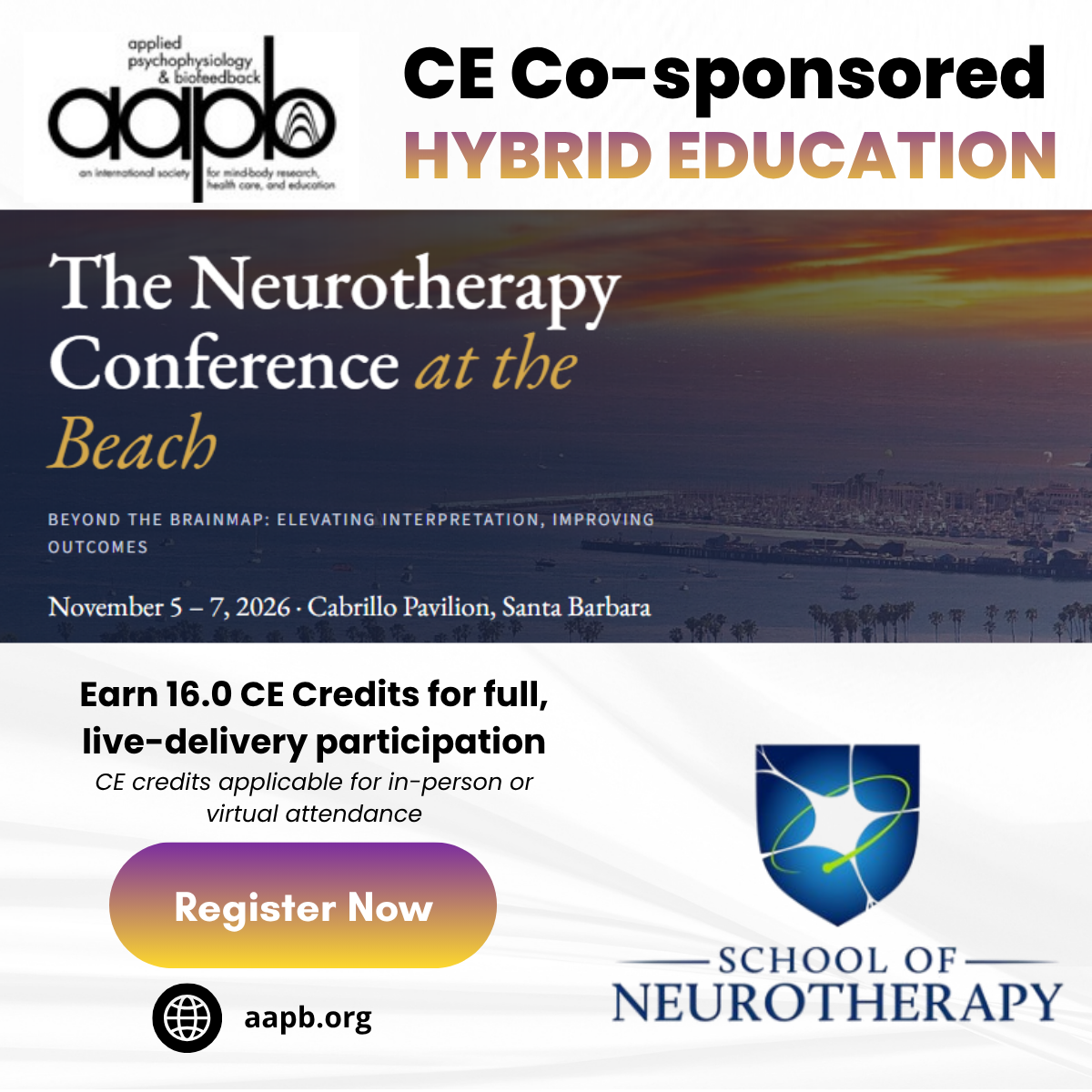
Sponsored in part by AAPB, The 7th Neurotherapy Conference includes three days of in-depth exploration, presentations by professionals in the field of clinically applied neuromodulation technology and computational neuroscience. As the evidence base for neuromodulation and neurofeedback increases, the conference will discuss current technologies, new and advancing studies, and offer an engaging look into the future of the field. Deepen your understanding of transcranial stimulation modalities, electromagnetic modalities, the creation and blending of stimulation techniques, and the application of advanced neuromodulation modalities for your patients, clients, or research. Areas of focus include:
NEUROSTIMULATION In neurostimulation, we are retraining the pathological brainwave patterns (like amplitude and connectivity) by using a customized blend of pulsed Electromagnetic Field stimulation and various modalities of transcranial current stimulation (tACS, tDCS, tRNS) in order to influence the brain in the direction appropriate for the condition at hand.
NEUROTHERAPY Neurotherapy is the combination of neurofeedback and neurostimulation (like pulsed Electromagnetic Field (pEMF), Transcranial Alternating Current Stimulation (tACS), transcranial Direct Current Stimulation (tDCS), and transcranial Random Noise Stimulation (tRNS).
BRAIN MAPPING & ANALYSIS An EEG and Quantitative EEG assessment process involves a series of applications where a clinician images and studies the brain, from the inside out, looking at connections, power, and functionality, to fully understand the nature of a patient's concern or interest. This conference will cover not only EEG and QEEG assessments, but also advanced quantitative techniques and platforms, such as ICA, MATLAB, and EEG Info.
EVENT CONTACT
[email protected] or by phone at 805-403-4202.
DATES
November 5-7, 2026
LOCATION
In-person or virtual:
Cabrillo Pavilion
1118 East Cabrillo Boulevard
Santa Barbara, CA 93103
SCHEDULE OF EVENTS
Program Schedule - Thursday, November 5
9am-10am Pacific
Thompson, PhD, MFT, QEEG-D, R.EEG T, BCN presents
What’s in Each Ingredient? Building Effective Recipes in Multimodal Neurostimulation
CE Credits: 1.0
Multimodal neurostimulation can be understood as a carefully constructed recipe—one in which each modality serves a distinct functional role in shaping brain and body dynamics. At the center of many NeuroField protocols is transcranial alternating current stimulation (tACS), serving as a foundational “ingredient” for modulating oscillatory activity. Additional forms of stimulation—including biphasic waveforms, square wave stimulation, pink and brown noise, and tDCS—introduce important variations that expand the range and specificity of clinical applications. Pulsed electromagnetic field stimulation (pEMF) can be layered as a complementary influence, providing a broader regulatory effect that supports and reinforces targeted interventions. Photobiomodulation further enhances this multimodal approach, contributing metabolic and neurophysiological support at the cellular level. This presentation will translate these modalities into a practical clinical framework, clarifying their mechanisms of action, their effects on brain and body systems, and how they can be strategically combined to create effective, individualized treatment protocols across diverse patient populations.
Tiff Thompson is a licensed therapist, educator, and technologist. She is the owner of NeuroField Neurotherapy, where she offers QEEG-based functional brain consulting to clinicians. She has worked in neurology, clinical settings, and has taught kindergarten to university. Tiff has served as Executive Director of the Western Association of Biofeedback and Neuroscience. She holds two master’s degrees, 1) Depth Counseling Psychology and 2) Rhetoric. She has a PhD in Psychology; her dissertation was on the intersection of psychodynamic psychology model of the psyche and EEG. She is board certified in neurotherapy and a licensed diplomate of QEEG. She teaches national and international neuromodulation and neurofeedback courses for NeuroField, Inc. with her husband. She hosts a yearly conference in Santa Barbara for neurotherapy practitioners and created an online educational platform: The School of Neurotherapy, which offers curricula in Quantitative EEG training, Board Certification in Neurotherapy training, and Neuromodulation education.
LEVEL: INTERMEDIATE
PRESENTER FINANCIAL DISCLOSURE: Dr. Thompson owns The School of Neurotherapy. The School of Neurotherapy, hosts the Neurotherapy Conference, which hosts presentations on subject matters which are not related to the School of Neurotherapy. The research findings presented herein are not related to any products or services currently provided by The School of Neurotherapy.
FOCUS: 100% Clinical
Utility/Validity/Risks: There are no risks inherent in the content of this presentation.
LEARNING OBJECTIVES:
- Recite five frequencies in the “hero ingredient” model
- List the “accoutrements” of pink noise, brown noise and biphasic stimulation in the “hero ingredient” model
- Explain the disrupt-entrain model
- Explain the difference between tDCS,tCAS,tRNS and Biophasic modalities
********
10am-11am Pacific
EJ Hepworth, MD presents
Consequences and Mechanisms of Cerebral Venous Congestion and Remedies Thereof
CE Credits: 1.0
Intracranial pressure homeostasis depends on balanced production, circulation, and absorption of cerebrospinal fluid, together with unobstructed cerebral venous drainage. When this equilibrium fails, intracranial pressure may become persistently elevated, intermittently elevated, or labile. Cerebral venous insufficiency can amplify these disturbances because cerebrospinal fluid absorption is governed partly by the pressure gradient between the subarachnoid space and venous sinuses. Jugular stenosis may arise from intrinsic narrowing, valves, thrombosis, or extrinsic compression by the styloid process, C1 transverse process, muscles, or structures. Resulting venous hypertension can propagate intracranially, reduce cerebrospinal fluid resorption, and impair clearance of metabolic byproducts. Patients may experience headache, pulsatile tinnitus, visual disturbance, disequilibrium, fatigue, impaired attention, slowed processing, memory difficulty, and “brain fog,” although symptom severity does not always parallel a single pressure measurement. Histaminergic excess, including mast-cell mediator release, may worsen this physiology through vasodilation, altered vascular permeability, neuroinflammation, autonomic activation, sleep disruption, and headache sensitization. In a positive-feedback cycle run amok, venous hypertension in the brain and spine can promote neural mast cell degranulation and systemic histaminergic effect. These effects can magnify cognitive dysfunction without necessarily being its primary cause. Abdominopelvic venous insufficiency or compression may further impede systemic venous return and increase collateral flow through the vertebral, epidural, azygos, and cranial venous networks. Posture, respiration, hydration, intrathoracic pressure, and autonomic tone may therefore produce fluctuations in symptoms. Together, these mechanisms suggest a dynamic pressure–flow disorder rather than a single obstruction. Careful evaluation should integrate symptoms, ophthalmologic findings, pressure measurements, cerebral and extracranial venous imaging, positional testing, autonomic assessment, and consideration of inflammatory and abdominopelvic contributors while avoiding attribution of nonspecific cognitive symptoms to venous disease without corroborating evidence.
Dr. EJ Hepworth is a Denver-based otolaryngologist known nationally for his contributions to endoscopic sinus and skull base surgery. He specializes in diagnosing elongated styloid processes and calcified ligaments that compress cranial nerves and the internal jugular vein — conditions that can cause severe headaches, tinnitus, and vascular complications. Dr. Hepworth advocates for a patient-centered, integrative approach to care, emphasizing education, open communication, and team-oriented medicine. He is currently developing innovative medical devices for minimally invasive treatment of sinus and skull base disorders, and his surgical and non-surgical methodologies have earned global recognition and collaboration with leading specialists. Dr. Hepworth holds an MD from the University of New Mexico School of Medicine, a B.S. in chemical engineering from the University of Minnesota and completed a Rhinology Fellowship at Stanford University. He is board certified by the American Board of Otolaryngology.
LEVEL: INTERMEDIATE
PRESENTER FINANCIAL DISCLOSURE: This presenter has no financial interest to disclose.
FOCUS: 80% Clinical/20% Research
Utility/Validity/Risks: The limitations of my methods are mainly due to clinical selection bias where I see patients referred by very well-informed and experienced neurologists, immunologists, rheumatologists and hyperspecialized healthcare providers. The extrapolation of my treatment paradigms, algorithms, and experiences to a broader community has the risk of over diagnosis and excessively aggressive treatment. This can be avoided by proper multidisciplinary cooperation in the case of each and every patient being considered for venous insufficiency. Our treatment methodologies as a consortium of those involved in the care of these patients is based upon mature literature, databased provider experiences, careful and rigorous usage of symptom and outcomes inventories and has stood the test of time of many international presentations, forums, and criticisms. A more comprehensive bibliography can be presented if necessary.
LEARNING OBJECTIVES:
- Summarize the role of vein anatomy and function in cerebrospinal health
- Summarize the interrelationship between vascular compressions in the head/neck region and the abdomen/pelvis and the humoral downstream consequences thereof
- Acquire an introductory knowledge base pertaining to vascular compression disease and its diagnosis and early pharmacology interventions
- Review outcomes of multidisciplinary interventions for venous insufficiency and how these conditions fit into an algorithm for management of cognitive and psychological disturbances
********
11:15 am-12:15 pm
Drew Pierson, MSc, Doctor of Acupuncture and Oriental Medicine (DAOM) presents
Brain Years: EEG as a Functional Biomarker of Neural Aging
CE Credits: 1.0
Aging is accompanied by progressive changes in neural oscillations, information processing, cognitive control, and neuroplasticity. Yet our conventional measures of brain aging are often expensive, anatomically focused, and poorly suited to repeated measurement. What if the EEG could provide a functional clock of the aging brain and, more provocatively, allow us to observe whether that clock changes in response to intervention? This presentation examines emerging research on brain years: an EEG brain-based age model developed from 643 electrophysiological, behavioral, and demographic features spanning oscillatory activity, event-related potentials, cognitive performance, and interactions among neural variables. Using machine learning methods, the model predicted chronological age with high accuracy, suggesting that aging leaves a measurable distributed electrophysiological signature rather than a single EEG marker.
Dr. Drew Pierson, L.Ac., DAOM, M.Sc., is a clinical neurofeedback therapist with 25 years of private practice experience. He holds a doctorate in Traditional Chinese Medicine and has spent years researching entire-network neurofeedback training, working with clients ranging from clinical populations to peak performers. He is a former submariner and professional chocolatier.
LEVEL: INTRODUCTORY
PRESENTER FINANCIAL DISCLOSURE: This presenter has no financial interest to disclose.
FOCUS: 25% Clinical/75% Research
Utility/Validity/Risks: This presentation examines EEG-based functional brain-age assessment and preliminary findings from a multimodal program incorporating neurofeedback, heart rate variability biofeedback, and transcranial photobiomodulation. Limitations and strength of evidence: The BrainYears study is a non-peer-reviewed preprint based on a secondary analysis of existing customer data. Its intervention analysis included 28 participants and a minimal-exposure comparison group of 22 participants. Participants were not randomly assigned, and the groups differed in age, sex distribution, and assessment intervals. Selection based on program adherence and uncontrolled factors, including sleep, medication changes, lifestyle, and expectancy effects, limit causal interpretation. Because participants received multiple modalities, the contribution of each intervention cannot be determined. The model’s ability to predict chronological age does not, by itself, establish diagnostic accuracy or clinical benefit. A decrease in predicted brain age represents a change in a functional estimate; it does not establish reversal of structural aging, prevention of dementia, or increased longevity. The durability of the changes and their relationship to meaningful cognitive outcomes require further investigation. Risks and safety reporting: The BrainYears manuscript does not provide systematic adverse-event reporting or event frequencies. Therefore, it cannot establish the most common risks or reliably quantify rare or severe risks of the combined program. Absence of reported adverse events should not be interpreted as evidence that no adverse events occurred. Broader research has reported fatigue during neurofeedback and mild headache during transcranial photobiomodulation, but these findings do not establish Sens.ai-specific risk rates. A further concern is misinterpretation of a brain-age estimate, potentially creating unnecessary anxiety or false reassurance. Supporting evidence: Peer-reviewed studies support the feasibility of estimating brain age from EEG and demonstrate the importance of measurement variability when interpreting individual results (Engemann et al., 2022; Hogan et al., 2021; Sun et al., 2019). Systematic reviews describe promising evidence for neurofeedback-related executive function improvements and photobiomodulation-related cognitive effects, while identifying methodological limitations and the need for more rigorous controlled trials (Lee et al., 2023; Viviani & Vallesi, 2021). These studies support the presentation’s scientific background but do not independently validate the specific BrainYears intervention findings. BrainYears will be presented as an emerging research measure rather than an established diagnostic test or proven treatment for age-related disease.
LEARNING OBJECTIVES:
- Differentiate chronological age, EEG-derived functional brain age, and structural brain aging, explaining what a BrainYears estimate represents
- Identify three categories of measurements used in the BrainYears model, including EEG oscillatory activity, event-related potentials, and behavioral task performance, and describe their relationship to attention, cognitive control, and response inhibition
- Interpret the study’s key model-performance measures, including correlation and mean absolute error, and explain their implications for assessing an individual’s predicted brain age
- Summarize the changes in predicted brain age observed following the Sens.ai neuromodulation program and compare these findings with those of the minimal-exposure group
********
1:30 pm -2:30 pm
Stephanie Ryall, MS, LPC, BCN-L, QEEG-DL presents
Neuromodulation: How Do We Know It's Working for the Client?
CE Credits: 1.0
As clinicians, we quickly learn that perception shapes experience. Individuals interpret and respond to the world through personal schemas influenced by biology, history, and context—there is no single rule that applies universally. Neuromodulation is no exception. While we often rely on established neuromarkers—elevated theta, high beta, posterior alpha, or lambda activity—the functional impact of these patterns can vary significantly across individuals. What supports optimal functioning in one client may contribute to dysregulation in another. This raises a critical clinical question: How do we know if what we are doing is actually working? This presentation explores both objective and subjective approaches to evaluating progress in neuromodulation. We will examine how to assess outcomes beyond protocol adherence, including client-reported experience, functional change, and meaningful behavioral shifts. Attendees will gain practical strategies for tracking progress, refining treatment in real time, and maintaining a truly individualized approach—one that keeps the client at the center of the therapeutic process.
Stephanie Ryall, MS, LPC, NCC, BCN, QEEG-D is a Licensed Professional Counselor, Nationally Certified Counselor and Quantitative Electroencephalogram-Diplomate. Stephanie owned and operated an individual private practice for 6 years. She is now the Founder and Clinical Director of Right Mind Wellness Center in Cincinnati, OH which provides wellness services including electroencephalography, neurofeedback, mental health counseling, Christian counseling, and nutrition counseling, with particular interest in low-income, Medicaid families. Stephanie is also bilingual and provides therapy in Spanish to members of the community.
LEVEL: INTRODUCTORY
PRESENTER FINANCIAL DISCLOSURE: Our presenter has no financial interest to disclose. This presentation will be free of commercial bias.
LEARNING OBJECTIVES:
- Identify at least 3 ways they can track progress in their clinics to see if neuromodulation is truly effective
- Discriminate between objective (voltage changes, dominant frequency changes, CPT scores, etc) and subjective measures of progress (self reporting scales, observations from clinicians and third parties) and identify how to use at least 1 of each measure for every client.
- Demonstrate the ability to create at least 1 uniform symptom tracking sheet to use practice wide for fidelity and accountability
- Identify at least 2 ways they can establish an agreed upon measurement system based on client goals and maintain a partnership mindset rather than expert-novice relationship
********
2:30 pm -3:30pm
Elizabeth Harris, MBChB, Dip Obs, Dip MSM, FRNZCGP presents
When Neurotherapy Isn't Enough: A Functional Medicine Primer for Better Patient Outcome
CE Credits: 1.0
This talk will empower you with the tools you need to find the functional medicine resources for the patient in front of you on a daily basis. First, we will go over a primer/ framework of functional medicine so that you will have a better understanding of the map and where to look. And then we will cover the people/ programs in functional medicine that are massively shifting the needle that you're going to love to hear about! You will walk away from this talk with a "if this, then that" guide to connect your patient with the functional medicine solutions that will augment your work together and solutions where their progress is stuck.
Dr. Elizabeth Harris has worked in general practice for 20 years and holds further qualifications in complimentary health and functional medicine. She has a passion for emergency medicine and rural medicine, having worked in small towns in both New Zealand and the Australian Outback. Working for the past 10 years in the new area of brainwave biofeedback, she uses the latest technology in medical EEG recording which allows for "brain mapping" and training to address brain related conditions such as ADHD, depression, anxiety and traumatic brain injury. In 2017, Dr. Harris became the first New Zealand Board Certified Neurotherapist and recently opened the first private clinic in the country to offer LORETA neurotherapy. With an interest in Traumatic Brain Injury (TBI), Fibromyalgia, Posttraumatic Stress Disorder (PTSD) and chronic unexplained illness, Dr. Harris combines an individualized biochemical and genetic approach with brain health measures and interventions in an aim to address previously unresolved medical symptoms and conditions.
LEVEL: INTRODUCTORY
PRESENTER FINANCIAL INTEREST: Our presenter has no financial interest to disclose. This presentation will be free of commercial bias.
FOCUS: 80% Clinical/20% Research
Utility/Validity/Risks: While there is substantial research supporting many of these individual physiological mechanisms, the evidence that they form a consistent causal sequence in individual patients remains limited. Some findings are derived from preclinical or observational studies and cannot necessarily be extrapolated directly to clinical practice. Clinical assessments and interventions: The presentation discusses emerging approaches to assessing and supporting physiological dysfunction, including nutritional interventions, N-acetylcysteine (NAC), thiamine and approaches targeting autonomic regulation and neurovascular function. The evidence supporting these interventions varies. For example, NAC has shown encouraging results in a small randomized controlled trial involving blast-related mild traumatic brain injury, but larger clinical trials are required to establish its effectiveness in broader concussion populations. Evidence for high-dose thiamine in neurological conditions remains preliminary. Risks and clinical considerations: Nutritional supplements and other interventions may have adverse effects, contraindications or interactions with medications. High-dose supplementation requires appropriate clinical oversight. Autonomic and neurovascular interventions may also have patient-specific contraindications or tolerability issues, depending on the modality used. The physiological framework presented is intended to support clinical reasoning and further investigation, rather than represent an established diagnostic or treatment protocol. Emerging interventions should complement, rather than replace, evidence-based medical assessment and care.
LEARNING OBJECTIVES:
- Identify key physiological mechanisms that may contribute to neurological dysfunction, including chronic stress, intestinal permeability, systemic inflammation, mitochondrial dysfunction and autonomic dysregulation
- Describe a whole-person clinical framework for understanding concussion, including neuroinflammation, altered neurovascular coupling, metabolic dysfunction and autonomic nervous system disturbances
- Explain how diet, lifestyle, stress and nutritional status can influence inflammation, cellular energy production and neurological function, and identify opportunities to support recovery
- Apply a systems-based framework to a clinical case, recognising potential interactions between gut health, liver function, immune activation and brain physiology, and identifying factors that may warrant further assessment or referral
********
3:45 pm -4:45 pm
Sahin Ozsoy, PhD (electrical engineering, BsC in Physics ) presents
From Clinical Practice to Large-Scale Insights: Lessons from the NeuroField Clinical Database
CE Credits: 1.0
The increasing availability of EEG and other neurophysiological data has created new opportunities to better understand brain function across diverse clinical populations. Over the past three years, the Neurofield Clinical Database has evolved from an initial concept into a growing real-world clinical resource containing approximately 5,000 subjects and more than 7,000 recording sessions. This presentation will discuss the development of the database, including the practical challenges of large-scale clinical data collection, standardization, quality control, and longitudinal integration within a neurotherapy setting.The presentation will also review two commonly used approaches to EEG analysis: The first approach relies on manual artifact editing combined with normative database comparisons and Z-score analysis, emphasizing clinician-guided interpretation and individualized assessment. The second approach focuses on automated signal-processing pipelines designed for scalability, reproducibility, and high-throughput analysis. Strengths, limitations, and practical considerations of both methods will be discussed in the context of clinical neurotherapy workflows.The second half of the presentation will focus on what can be learned from large-scale EEG datasets. Using aggregated findings from the Neurofield Clinical Database, the session will explore patterns and trends observed across the clinical population. Results will be presented in an interactive “Fact or Fiction?” format, examining common assumptions and controversial topics in EEG analysis and neurotherapy. The goal is to encourage critical thinking about data interpretation, clinical relevance, and the future role of large clinical databases in advancing evidence-informed neurotherapy practice.
Dr. Sahin Ozsoy is an electrical engineer and physicist specializing in electromagnetics, signal processing, and multi-channel physiological data systems. At NeuroField, he leads the development of high-performance software and hardware for multimodal neurophysiological acquisition, analysis, neurofeedback, and neurostimulation. He brings over 27 years of engineering experience spanning hardware integration, embedded systems, algorithm optimization, and scalable analytical tools for neuroscience applications. Prior to entering the neuroscience field, Dr. Ozsoy spent 17 years in the defense industry developing electronic warfare and electromagnetic technologies for the Turkish Navy and NATO — including assignments at the Turkish Navy Research Center in Istanbul and the NATO Seasparrow Project Office in Arlington, Virginia. He retired in 2018 as Navy Commander (Engineer) after leading the Electronics and Weapons Department at Turkish Navy Headquarters. Dr. Ozsoy now applies his expertise to advancing neurotherapy through innovative engineering solutions that support brain research, cognitive enhancement, and the treatment of neurological disorders.
LEVEL: INTERMEDIATE
PRESENTER FINANCIAL INTEREST: Our presenter has financial interest to disclose. He is an employee of NeuroField which develops the equipment, software, database and AI models discussed in this talk. He may benefit financially from the information discussed in this presentation. This presentation will be free of commercial bias.
FOCUS: 50% Clinical/50% Research
Utility/Validity/Risks: The presentation does not discuss treatments or interventions. It touches on assessments using statistical and peer-reviewed evidence based data.
LEARNING OBJECTIVES:
- Describe how a large clinical EEG database can serve as a reference, and explain why robust statistics, rich metadata and repeat assessments matter more than limiting it to "normal-only" subjects
- Compare manual epoch editing with z-scores against automated pipelines (ICA, source reconstruction), naming at least one strength and one limitation of each, and explain why filtering repeatedly distorts the data
- Identify at least three factors that bias normative comparisons, such as age, sex, sleep, muscle artifact, impedance and skewed distributions, and say when to use transformed z-scores and when to use percentiles
- Evaluate common clinical claims against published evidence, including theta/beta ratio as an ADHD diagnostic, coherence as a measure of "communication," and EEG's limits on subcortical activity, and decide whether each is fact, fiction or "it depends"
Program Schedule - Friday, November 6
9am-10am Pacific
Yury Kropotov, PhD (theoretical physics, philosophy and neurophysiology) presents
Neuromarkers: Sensory, Affective, Memory, and Cognitive Process in Normal and Pathological Function
CE Credits: 1.0
The report presents a methodology for identifying hidden functional sources from event-related group potentials. This methodology was developed over the past 20 years at the Institute of the human brain after N.P. Bechtereva and was commercially implemented at HBI med, a Swiss-based company. The idea behind the methodology is that when performing psychological tests of perception, memory, and cognitive control, various neurophysiological processes unfold in the human brain. These processes are correlates of mental operations that are represented independently and in different ways in different individuals. By recording multichannel EEG in a large group of subjects who perform a set of standard tests, we are able to calculate electrophysiological correlates of the superposition of these brain processes in the form of event-related potentials (ERPs), and by applying blind source separation methods to the obtained ERPs, we are able to calculate latent components that are correlates of hidden psychological processes represented independently in different respects. We compiled a normative database (1,000 healthy subjects aged 7-80 years) and databases of patients with mental disorders (ADHD, autism, schizophrenia, OCD, depression, PTSD, anxiety). Our own research shows that latent components of evoked potentials (EPs) are specifically associated with various psychological processes, such as repetition suppression and enhancement in visual memory, conflict detection and monitoring, action suppression, reactivation of stimulus-response associations in cognitive processes, and activation processes in the affective domain.This approach provides us with a unique opportunity to assess brain dysfunction in mental disorders and develop appropriate protocols for various neuromodulation methods (traditional neurofeedback, infra-low-frequency neurofeedback, transcranial direct current stimulation, and photobiomodulation). Experience with neuromodulation methods within the framework of this approach will be presented. The research results have been published in over 100 articles and 7 monographs.
Professor Yury D. Kropotov is a world-renowned researcher in EEG, quantitative EEG, event-related potentials, and neurofeedback. He graduated from the Faculty of Physics at the University of Leningrad (now St. Petersburg) in 1972, holds three doctoral degrees, and holds a professorship in neurophysiology. He serves as Director of the Neurobiology Laboratory at the Institute of the Human Brain of the Russian Academy of Sciences in Saint Petersburg, and as a professor at the Norwegian University of Science and Technology in Trondheim. He is the founder of the Institute of Medical Psychology in Moscow and co-founder of HBI-med Switzerland. Prof. Kropotov is the originator of the QEEG normative database for children, adults, and pathological populations, and the author of the widely used textbook Quantitative EEG, Event-Related Potentials and Neurotherapy. His current research explores how modulating brain parameters through neurotherapy can enhance peak performance in athletes.
LEVEL: ADVANCED
PRESENTER FINANCIAL DISCLOSURE: This presenter has no commercial interest to disclose.
FOCUS: 50% Clinical/50% Research
Utility/Validity/Risks: Most of the results presented in this paper are made by the HBI research and clinical groups and are published in peer-review journals.
LEARNING OBJECTIVES:
- Summarize basic concepts of event-related potentials as a research tool
- Summarize basic concepts of event-related potentials as a clinical tool
- Utilize the HBI methodology for making diagnosis of brain dysfunction
- Utilize the HBI methodology for making prognosis of effects of neuromodulation
********
10am-11am Pacific
John LeMay, PhD, MA presents
The LeMay Model (AODEMR): Using ERP Staging to Guide Neuromodulation
CE Credits: 1.0
This presentation introduces an integrated clinical framework for combining EEG and ERP data in assessment and treatment planning. While EEG provides insight into baseline arousal, regulation, stability, and overall network readiness, ERP offers a temporally precise view of how the brain processes information under task demand. Building on the LeMay ERP model—Arouse, Orient, Detect, Execute, Monitor, and Reorganize/Return to Baseline—this approach moves beyond descriptive waveform analysis toward a functional understanding of where processing breaks down and how interventions can be more effectively sequenced. A central focus of the presentation is a novel interpretive distinction between state failure, stage failure, and coupling failure. Through clinical case examples, attendees will see how this framework refines assessment and treatment planning across conditions such as ADHD, trauma-related dysregulation, and post-concussive impairment. The session concludes with practical applications for neurofeedback and neuromodulation, offering clinicians a clearer method for determining where to begin treatment and how to sequence interventions for improved outcomes.
With a focus on neurobehavioral challenges such as Autism, OCD, and ADHD, John LeMay is a certified Marriage and Family Therapist in Florida and has been practicing since 1995. John holds three patents in brain computer interface connecting drones to EEG as a clinical intervention. He has consulted on numerous QEEG’s and ERPs within clinical settings. John has also been a beta tester for numerous biofeedback systems and has a keen interest in various neuromodulator interventions.
LEVEL: INTERMEDIATE
PRESENTER FINANCIAL DISCLOSURE: This presenter has financial interest to disclose. Dr. LeMay is a Founder and CEO of NeuroGenesis Diagnostics a new company creating amplifiers and testing materials.The presentation is intended to provide clinically relevant educational information regarding EEG/ERP assessment and neuromodulation. Commercial relationships will be disclosed as appropriate.
FOCUS: 80% Clinical/20% Research
Utility/Validity/Risks: This presentation introduces an integrative clinical framework for interpreting EEG and event-related potentials (ERPs) to inform neurofeedback and neuromodulation treatment planning. Limitations include the variability of EEG/ERP findings across individuals, susceptibility to recording artifacts, differences in normative databases, and the influence of medication, fatigue, arousal, and other physiological factors. The proposed LeMay ERP model is a clinical interpretive framework and has not been independently validated as a treatment-selection algorithm. EEG and ERP abnormalities are not independently diagnostic of specific psychiatric or neurological disorders.Potential risks associated with neuromodulation interventions, including tDCS, tACS, and pulsed electromagnetic field (pEMF) stimulation, vary by modality, device, stimulation parameters, and patient characteristics. Adverse effects may include transient headache, scalp discomfort, skin irritation, dizziness, fatigue, and changes in arousal or sleep. More serious adverse events, including skin injury or seizure, are uncommon or rare with appropriately administered, established noninvasive electrical stimulation protocols but warrant consideration, particularly in susceptible individuals or when stimulation parameters fall outside established safety guidelines. Clinical implementation requires appropriate screening, informed consent, individualized assessment, adherence to device-specific safety guidelines, and ongoing monitoring. EEG/ERP-guided treatment selection should be considered a clinical hypothesis rather than an established predictor of treatment response.
LEARNING OBJECTIVES:
- Identify the six stages of the AODEMR model for evaluation of client function in attention and state management
- Differentiate the contributions of EEG and ERP for evaluating self-regulation, task related processing and cortical efficiency
- Distinguish state failure, stage failure, and coupling failure using EEG and ERP findings to identify information processing bottlenecks
- Apply an integrated EEG/ERP interpretation framework to a clinical case to identify a potential intervention entry point and justify the sequencing of neuro-modulation and neurofeedback strategies
********
11:15 am-12:15 pm
David Reynolds, Bsc, presents
Somatic Resonance Beyond Solfeggio
CE Credits: 1.0
Pallesthesia is primal: before we experience the world, we experience pulse — heartbeat, breath, the cadence of a body that is not our own. Lullabies, ancestral drumming, ritual chant: humans have always used patterned vibration to move, regulate, and connect. Repetition builds prediction, deviation creates attention, and return brings resolution. These aren't just aesthetic experiences. They're neurophysiological events. We are, at every level, oscillating systems, from ultradian endocrine rhythms (0.0001–0.001 Hz) to CSF fluctuations, respiratory sinus arrhythmia, cardiac pulse, EEG activity, fascial resonance, and Mr Bsc(Hons)GradDip(Chiro) NeuroField +1 (805) 722 5620 1836 State St Santa Barbara air-conducted acoustic vibration (up to 20,000 Hz); our bio-resonant bodies are a nested matrix of coupled neuro-endocrine-mechano-resonators. When cortical rhythmicity, sensorimotor loops, descending motor drive, and spinal circuitry intersect with felt vibration and perceptible sound we respond — so are there specific frequencies and harmonics to which we all respond or are those frequencies individually unique. Could they even be linked to each person's Individual Alpha Frequency (IAF), and does the IAF synchronize with the whole-body mechanical resonance of an individual? How fundamental is the IAF? When extrinsic oscillators meet intrinsic neurophysiological ones, does harmonic relationship produce genuine physiological coupling — or is it coincidental numerics? This presentation explores the notion of bio-resonance and just what that means: to which detectable frequencies does the body respond? Which systems are actually cross-frequency coupled? This presentation questions what is real and what is coincidental, what is detectable, and what does response actually mean?
Originally a teacher in New South Wales, Australia, David studied life sciences in Tasmania and neuroanatomy at UNSW before completing his chiropractic studies and entering private practice in 1989. He specializes in brainstem reflexes in the context of cranio-dental form and function, and has presented original work to international audiences across the U.S., Canada, and Australia — including the International Chiropractic Congress in Sydney (1988), the SOT Cranial Conference in Melbourne (2000), and the International College of Applied Kinesiology in Toronto (2005). He served as chiropractor to the Australian Swimming Team at the 2001 World Championships in Fukuoka, Japan, and has worked with numerous high-profile athletes and performing artists. In 2009, David moved to New York, where he collaborated with Dr. Harold Gelb on complex cranio-dental cases and mentored postgraduate research students at NYU College of Dentistry. He relocated to Santa Barbara in 2018 and now practices within NeuroField Neurotherapy.
LEVEL: INTRODUCTORY
PRESENTER FINANCIAL INTEREST: Our presenter has financial interest to disclose. He is employed by the School of Neurotherapy and may benefit financially from the content discussed herein this presentation. This presentation will be free of commercial bias.
FOCUS: 40% Clinical/20% Research
Utility/Validity/Risks: None.
LEARNING OBJECTIVES:
- Summarize the origins of multiple sound therapies
- Describe the nature of body oscillations and degrees of resonance and entrainment
- Describe the nature of whole-body resonance
********
2:30 pm -3:30pm
James Seberger, MD, PhD, presents
Consciousness from Breathing: How Singlet Oxygen Creates Awareness, Memory, and Addiction
CE Credits: 1.0
This lecture examines the fundamental derivation of consciousness from the medical context, using the Glasgow coma score. The different levels of consciousness in the medical context demonstrate lower cognitive response--to the point of unresponsiveness. This demonstrates the fundamental reliance of consciousness upon metabolism, which is the continued utilization of oxygen, to be oxidized by mitochondria in the brain. However, how does this oxidation allow for variability to act, and how does it lead to memory and addiction? The present talk examines the ability of oxygen to be held in indeterminate quantum states, which allows for the effects of magnetic fields to impart information, leading to determinate chemical reactions. In the brain, these result in memory. Alas, when coupled with dopamine, addiction. Understanding these basic mechanisms offers a rational basis upon which to use magnetic and other electric fields in for the treatment of cognitive and addictive disorders.
Peter James Seberger, MD is a primary care, integrative, and preventive medicine physician. He earned his Ph.D. in biochemistry and molecular biology (1999) and M.D. (2003) from the University of Nebraska Medical Center, followed by a Family Medicine residency in Wichita, KS. He has practiced emergency medicine for over a decade and opened a direct care practice in 2012. Dr. Seberger works alongside his wife, Veronica, RN, BSN, BCN at Cognitive Performance & Health, where he integrates conventional medicine, nutritional supplementation, and neurofeedback into patient care. His approach is rooted in identifying root causes rather than managing symptoms alone. "I try to have as many tools in my toolbox as I can. My goal is to have the patient well and balanced — stop any decline that may be occurring, improve their health, and really make them feel better and perform better."
LEVEL: INTERMEDIATE
PRESENTER FINANCIAL INTEREST: Our presenter has no financial interest to disclose. This presentation will be free of commercial bias.
FOCUS: 25% Clinical/75% Research
Utility/Validity/Risks: The current evidence is laboratory based and has further determinations to be made in the change of health of people.
LEARNING OBJECTIVES:
- Review of medical levels of consciousness, i.e. the Glasgow Coma Score
- Review of the relationship of the Glasgow Coma Score to physiology
- Explain how oxygen and its utilization in the brain in the singlet-oxygen state leads to different cognitive states and memories
- Explain how magnetic fields, both peripheral and local, impact singlet oxygen states, affecting brain states, memories,and addiction
********
3:45 pm -4:45 pm
Nicholas J. Dogris, PhD, presents
From Clinical Practice to Large-Scale Insights: Lessons from the NeuroField Clinical Database
CE Credits: 1.0
The increasing availability of EEG and other neurophysiological data has created new opportunities to better understand brain function across diverse clinical populations. Over the past three years, the Neurofield Clinical Database has evolved from an initial concept into a growing real-world clinical resource containing approximately 5,000 subjects and more than 7,000 recording sessions. This presentation will discuss the development of the database, including the practical challenges of large-scale clinical data collection, standardization, quality control, and longitudinal integration within a neurotherapy setting.The presentation will also review two commonly used approaches to EEG analysis: The first approach relies on manual artifact editing combined with normative database comparisons and Z-score analysis, emphasizing clinician-guided interpretation and individualized assessment. The second approach focuses on automated signal-processing pipelines designed for scalability, reproducibility, and high-throughput analysis. Strengths, limitations, and practical considerations of both methods will be discussed in the context of clinical neurotherapy workflows.The second half of the presentation will focus on what can be learned from large-scale EEG datasets. Using aggregated findings from the Neurofield Clinical Database, the session will explore patterns and trends observed across the clinical population. Results will be presented in an interactive “Fact or Fiction?” format, examining common assumptions and controversial topics in EEG analysis and neurotherapy. The goal is to encourage critical thinking about data interpretation, clinical relevance, and the future role of large clinical databases in advancing evidence-informed neurotherapy practice.
Nicholas Dogris, PhD,is a licensed psychologist who practices in Santa Barbara, California. Dr. Dogris has been in the EEG field since 1987 developing many different types of EEG neurofeedback protocols and approaches for multiple systems. He is board certified in neurofeedback and Quantitative EEG . Dr. Dogris has worked with a wide variety of patient populations ranging from adults to infants and has applied neurostimulation and neurofeedback modalities to patients with Autism, ADHD, Depression, Anxiety, TBI, Opioid and Alcohol Dependence, Dementia and Parkinson's Disorder. He is the CEO and Founder of NeuroField, Inc. A company that designs and manufactures EEG, tACS/tDCS, pEMF and Photobiomodulation devices along with EEG and ERP testing and analysis software. He is also the director of neuroscience for FHE Health in Deerfield Beach Florida. Dr. Dogris continues to innovate and create new ways to analyze and regulate the brain and has made dozens of contributions to the field over the past 30 years.
LEVEL: INTERMEDIATE
PRESENTER FINANCIAL INTEREST: Our presenter has financial interest to disclose. He is the owner and CEO of NeuroField which develops the equipment, software, database and AI models discussed in this talk He may benefit financially from the information discussed in this presentation. This presentation will be free of commercial bias.
FOCUS: 50% Clinical/50% Research
Utility/Validity/Risks: The evidence base of this technology is in its infancy. More studies are needed to confirm the findings that will be presented in this presentation. The data presented represents more than 20 years of experience in the field along with the innovation and development of the technology.
LEARNING OBJECTIVES:
- Summarize the history of neurostimulation over the last 100 years
- Describe the research and development research of neurostimulation for specific conditions such as anxiety, depression, substance abuse and traumatic brain injury
- Explain how blending neurostimulation modalities can lead to balanced ANS and CNS in first responders with PTSD, Anxiety and Depression
- Describe EEG/QEEG/ERP assessment to target and regulate pathological electrical sources in the brain
Program Schedule - Saturday, November 7
9am-10am Pacific
Robert H. Reiner, Ph, BCB, BCN presents
Virtual Reality & NeuroField Integration-Enhancing Neuroplasticity and Clinical Outcomes
CE Credits: 1.0
This presentation explores the integration of virtual reality (VR) with neurofeedback using NeuroField systems to enhance clinical outcomes. It highlights how immersive VR environments can be paired with real-time NeuroField stimulation to create targeted, engaging interventions for conditions such as anxiety, PTSD, and attention disorders. Attendees will learn the underlying mechanisms, review clinical applications, and see how combining VR exposure with NeuroField stimulation can improve self-regulation, accelerate learning, and increase treatment adherence in a modern therapeutic setting.
Robert H. Reiner, PhD, BCN, BCB is the founder and Executive Director of Behavioral Associates and has practiced psychology since 1981. He specializes in Cognitive Behavioral Therapy (CBT) integrated with biofeedback, neurofeedback, NeuroField, QEEG assessment, and Virtual Reality Therapy (VRT) for individuals, couples, and families. Dr. Reiner is widely recognized for his work treating anxiety and phobias — particularly fear of flying — through biofeedback and virtual reality, with coverage in the Wall Street Journal, New York Times, USA Today, Newsweek, Time Out, and a featured episode of National Geographic. He is frequently called upon as a media expert and has consulted for corporations and served as an expert witness in high-profile legal cases, including child custody proceedings and criminal trials involving MMPI-2 personality assessment. Dr. Reiner's integrative approach bridges evidence-based psychology with leading-edge neurotechnology to deliver comprehensive, individualized care.
LEVEL: INTRODUCTORY
PRESENTER FINANCIAL DISCLOSURE: This presenter has no commercial interest to disclose.
FOCUS: 50% Clinical/50% Research
Utility/Validity/Risks: Verification that the patient does not have a thought disorder but instead phobic anxiety.
LEARNING OBJECTIVES:
- Summarize history of VR and mental health-Likert Scale
- Summarize how to use NF64 in collaboration-Likert Scale
- Identify which patients benefit-Likert Scale
- Identify which patients to avoid, e.g. thought disorder Likert Scale
********
10:00 am-11:00 am Pacific
Cameron Crumpler, L.Ac presents
Chinese Medicine in Neurotherapy: Functional Diagnosis and Clinical Applications
CE Credits: 1.0
Chinese medicine's energetic model holds the longest continuous clinical track record of any medical system in history. For thousands of years, practitioners have derived diagnostically reliable information through microsystem assessment — the tongue, the ear, and the radial pulse — illuminating organ function, vitality, and mental-emotional health with a consistency that modern medicine is only beginning to appreciate. This presentation explores the mechanisms of acupuncture through both biophysical and metaphysical lenses, offering a contrasting view of biology in which the Liver and Kidneys are as relevant to brain function as the hippocampus. Rather than treating these frameworks as competing, we'll examine how the energetic model can meaningfully augment neuroscientific clinical practice. Attendees will leave with practical tools: real clinical presentations that may be occurring in your practice undetected, a framework for diagnosing them through an Eastern medicine lens, and concrete ways to apply these principles using NeuroField equipment.
Cameron Crumpler, L.Ac., is a licensed acupuncturist, consciousness researcher, and dedicated meditation practitioner with deep roots in both Eastern medicine and neurotherapy. Drawing on a distinctive blend of clinical and academic training, he has been at the forefront of integrating biofeedback technologies with acupuncture and meditative practice — work that bridges two fields rarely brought into direct dialogue. Cameron's perspective is grounded in the conviction that energetic and neuroscientific models of health are far more complementary than is commonly recognized. His work explores where these frameworks converge, offering clinicians and researchers a more complete picture of human physiology and consciousness. Practitioners who integrate both traditions, he finds, consistently achieve outcomes that neither approach reaches alone.
LEVEL: INTRODUCTORY
PRESENTER FINANCIAL DISCLOSURE: This presenter has no financial interest to disclose.
FOCUS: 70% Clinical/30% Research
Utility/Validity/Risks: the only risks involved in the research and practices herein described involves the insertion of acupuncture needles
LEARNING OBJECTIVES:
- Identify the brief history of Chinese medical applications and the neurophysiological mechanisms of acupuncture techniques as they pertain to neurotherapy
- Utilize distal points on the arms and legs using E-stim and PEMF to optimize brain function
- Explain ancillary diagnostic techniques which can improve clinical strategy and patient outcomes (eg. tongue diagnosis) for neurotherapists
- Introduce strategies for cultivating tactile awareness of Qi flow in the body as a means to support quantitative brain mapping data
********
11:15 am-12:15 pm
Arnaud Delorme, PhD, presents
Artificial Intelligence in Neurotherapy
CE Credits: 1.0
Artificial intelligence is rapidly reshaping neurotherapy by enabling scalable, data driven analysis of electroencephalography through the emergence of EEG foundation models trained on large, heterogeneous datasets. These models promise to learn transferable representations of brain activity that support robust biomarker discovery across disorders and interventions, potentially overcoming long standing limitations related to small sample sizes, site effects, and handcrafted features. In parallel, conversational AI systems are beginning to act as interactive scientific assistants that can support neurotherapy research by helping design preprocessing and analysis pipelines, documenting methodological choices, and assisting with transparent reporting and interpretation of results. When appropriately constrained and validated, such tools may improve reproducibility and accessibility without replacing expert judgment. Together, EEG foundation models and scientifically grounded chatbots point toward a new generation of neurotherapy workflows in which biomarker development, methodological rigor, and human expertise are jointly augmented by artificial intelligence.
Arnaud Delorme, PhD, is a CNRS principal investigator in Toulouse, France, a faculty member at the University of California, San Diego, and a Scientist at the Institute of Noetic Sciences. In 2000, Dr.Delorme completed his PhD thesis on visual categorization in humans, monkeys, and machines. Dr. Delorme then moved to the Salk Institute for a postdoc in Terry Sejnowski and Francis Crick’s laboratory where he focused on statistical analysis of electroencephalographic (EEG) signals recorded during various cognitive tasks. He developed the free EEGLAB software for advanced analysis of EEG signals, software which is now amongst the most used in EEG research worldwide. He was awarded a Brettencourt-Schueller young investigator award and a 10-year anniversary ANT young investigator award for his contributions to the field of EEG research.
LEVEL: INTERMEDIATE
PRESENTER FINANCIAL DISCLOSURE: This presenter has no financial interest to disclose.
FOCUS: 20% Clinical/80% Research
Utility/Validity/Risks: The presentation discusses emerging AI methods for EEG analysis and neurotherapy research. Key limitations include possible bias from training datasets, limited generalizability across populations and recording systems, sensitivity to preprocessing choices, and the risk of overinterpreting model outputs. EEG foundation models and conversational AI tools are not substitutes for clinical judgment and should be independently validated before use in clinical assessment or treatment. The presentation does not recommend a specific clinical intervention and therefore does not introduce direct treatment related risks.
LEARNING OBJECTIVES:
- Explain how EEG foundation models can leverage large, heterogeneous datasets for neurotherapy research
- Identify how AI based EEG models may improve biomarker discovery across disorders and interventions
- Describe how conversational AI can assist with EEG preprocessing, analysis, documentation, and interpretation
- Evaluate the benefits and limitations of integrating AI tools into neurotherapy workflows while maintaining scientific rigor and expert oversight
********
1:30 pm -2:30 pm
David Marquis, DC, DACBN presents
Real-Life Application of Functional Medicine - Beyond Symptom Management
CE Credits: 1.0
Dive into a day in the life of the clinic of Dr. David Marquis and Dr. John LeMay as they navigate the myriad of cases that comprise their typical case load. From developmental delay to TBI to Chronic inflammation and auto-immunity to the many states of neurodegenerative disease. You’ll get a window into how a case is evaluated, worked up, and care is implemented. Metabolic and neurological pathways are not independent from one another. The overlap and understanding of their relationship is integral to clinical success.
Dr. David Marquis takes a functional medicine approach to the evaluation and care of complex, chronic health conditions, with a focused interest in neurodegenerative and neurodevelopmental disorders. He brings more than 25 years of clinical experience supporting patients with layered metabolic presentations. Dr. Marquis holds a bachelor's in human biology from Brigham Young University–Hawaii, a Doctor of Chiropractic from Western States University, and a post-doctoral diplomate in clinical nutrition from the American Clinical Board of Nutrition (ACBN). He continuously advances his expertise through affiliations with the Institute of Functional Medicine (IFM) and the Interdisciplinary Association of Functional Neurosciences and Rehabilitation (IAFNR). An accomplished speaker and writer, he has served as a guest lecturer at the university level. His practice is located on the Central Coast of California, with patients seen in-person and via telehealth from around the world.
LEVEL: INTERMEDIATE
PRESENTER FINANCIAL DISCLOSURE: Our presenter has no financial interest to disclose. This presentation will be free of commercial bias.
FOCUS: 75% Clinical/25% Research
Utility/Validity/Risks: No known risks in the content of this presentation.
LEARNING OBJECTIVES:
- Assess metabolic obstacles impacting optimal brain function including blood sugar dynamics, Blood Gases (O2 / CO2), Environmental Toxicity, and Immune driven obstacles
- Map out and quantify sources and severity of systemic inflammation and its broad impact on neural Function
- List considerations that may be needful to assist a patient to be capable and functionally ready to receive and optimally respond to care and therapeutic intervention
- Discuss the concept of coupling therapies within the tolerance of the individual’s metabolic capacity
********
2:30 to 3:30pm
David Siever, CET and John LeMay, PhD, present
The Glymphatic System & Neurodegenerative Disease: Audio-Visual Entrainment as a Therapeutic “Pump"
CE Credits: 1.0
Since the discovery of photic driving by Adrian and Matthews in 1934, much has been discovered about the benefits of brainwave entrainment (BWE) or audio-visual entrainment (AVE), as it is commonly known today. AVE increases cerebral blood flow, beneficial neurotransmitters, has profound calming effects, induces a meditative mind state, increases brain lactate, triggers heat-shock protective protein, stimulates the circulation of cerebral spinal fluid (CSF). Research on the effectiveness of AVE in promoting relaxation, cognition and hypnotic induction, treating ADD, PMS, SAD, PTSD, migraine headache, chronic pain, anxiety, depression and episodic memory is now available. Recent discoveries have shown AVE to be a powerful means of recovery from traumatic brain injuries of a newly discovered type, termed thalamocortical disconnect. Poor circulation of CSF is associated with Alzheimer’s, Parkinson’s, Post Concussion Syndrome and Multiple Sclerosis. AVE has been shown to boost CSF circulation by 22% / minute. Case studies of these disorders are ongoing, with very positive results. We are, at every level, oscillating systems, from ultradian endocrine rhythms (0.0001–0.001 Hz) to CSF fluctuations, respiratory sinus arrhythmia, cardiac pulse, EEG activity, fascial resonance, and air-conducted acoustic vibration (up to 20,000 Hz); our bio-resonant bodies are a nested matrix of coupled neuro-endocrine-mechano-resonators. When cortical rhythmicity, sensorimotor loops, descending motor drive, and spinal circuitry intersect with felt vibration and perceptible sound we respond — so are there specific frequencies and harmonics to which we all respond or are those frequencies individually unique. Could they even be linked to each person's Individual Alpha Frequency (IAF), and does the IAF synchronize with the whole-body mechanical resonance of an individual? How fundamental is the IAF? When extrinsic oscillators meet intrinsic neurophysiological ones, does harmonic relationship produce genuine physiological coupling — or is it coincidental numerics? This presentation explores the notion of bio-resonance and just what that means: to which detectable frequencies does the body respond? Which systems are actually cross-frequency coupled? This presentation questions what is real and what is coincidental, what is detectable, and what does response mean?
Dave Seiver graduated in 1978 as an engineering technologist and went on to work at the University of Alberta's Faculty of Dentistry, designing TMJ diagnostic equipment and teaching physiology. Observing high rates of anxiety in TMJ patients led him to study biofeedback — and ultimately to design his first Audio-Visual Entrainment (AVE) device in 1984. Through his company, Mind Alive Inc., Dave has spent four decades researching and refining AVE technology for anxiety, depression, ADHD, cognitive decline, brain injury, and more. Following 2023 research linking photic stimulation to increased CSF circulation, he developed targeted AVE protocols for Alzheimer's, Parkinson's, MS, and post-concussion syndrome. He also designs CES, tDCS, and tACS devices, conducts QEEG assessments, and has published widely on brain stimulation technologies.Dave taught a 30-CEU course on Stimulation Technologies (2014–2020) and continues to research, innovate, and — as he puts it — dance in his dendrites.
With a focus on neurobehavioral challenges such as Autism, OCD, and ADHD, John LeMay is a certified Marriage and Family Therapist in Florida and has been practicing since 1995. John holds three patents in brain computer interface connecting drones to EEG as a clinical intervention. He has consulted on numerous QEEG’s and ERPs within clinical settings. John has also been a beta tester for numerous biofeedback systems and has a keen interest in various neuromodulator interventions.
LEVEL: INTERMEDIATE
PRESENTER FINANCIAL DISCLOSURE: Dr. LeMay has no financial interest to disclose. Dave Siever is the Owner of MindAlive and may benefit financially as a result of research findings presented herein this presentation. This presentation will be free of commercial bias.
FOCUS: 75% Clinical/25% Research
Utility/Validity/Risks: No known risks in the content of this presentation.
LEARNING OBJECTIVES:
- Describe the physiological effects of audio-visual entrainment / stimulation
- Describe the glymphatic system, cerebral spinal circulation and its role in degenerative neurological diseases
- Summarize a technique utilizing light and sound to pump cerebral spinal fluid
- Summaries case study involving Alzheimer's and Parkinson's
Continuing Education Statement
 Psychologists: The Association for Applied Psychophysiology and Biofeedback is approved by the American Psychological Association to sponsor continuing education for psychologists. The Association for Applied Psychophysiology and Biofeedback maintains responsibility for the program and its content.
This event offers a MAXIMUM of 16.0 CE credits for maximum participation.
Psychologists (APA) Coverage & Reciprocity:
The following state boards accept courses from APA providers for Counselors: AK, AL, AR, AZ, CA, CO, CT, DC, DE, FL, GA, HI, IA, ID, IL, IN, KS, KY, MD, ME, MO, NC, ND, NH, NE, NJ, NM, NV, OK*, OR, PA, RI, SC, SD, TN, TX, UT, VA, WI, WY
MI: No CE requirements
The following state boards accept courses from APA providers for MFTs: AK, AR, AZ, CA, CO, CT, DE, FL, GA, IA, ID, IN, KS, MD, ME, MO, NE, NC, NH, NJ, NM, NV, OK*, OR, PA, RI, SC, SD, TN, TX, UT, VA, WA, WI, WY
The following state boards accept courses from APA providers for Addictions Professionals: AK, AR, CO, CT, DC, DE, GA, IA, IN, KS, LA, MD, MO, MT, NC, ND, NE, NJ, NM, NY (outstate held), OK*, OR, SC, UT, WA, WI, WY
* OK accepts APA credit for live, in-person activities. For all ethics and/or online courses, an application is required.
MA / MFTs: Participants can self-submit courses not approved by the MAMFT board for review.
The following state boards accept courses from APA providers for Social Workers: AK, AR, AZ, CA, CO, DE, FL, GA, ID, IN, KY, ME, MN, MO, NE, NH, NM, OR, PA, VT, WI, WY
Other Information
AMERICANS WITH DISABILITIES ACT (ADA) STATEMENT: ADA accommodations will be made in accordance with the law. If you require ADA accommodation, please indicate what your needs are at the time of registration. We cannot ensure the availability of appropriate accommodations without prior notification.
GRIEVANCE POLICY: The Association of Applied Psychophysiology and Biofeedback (AAPB) is fully committed to conducting all activities in strict conformance with the American Psychological Association's Ethical Principles of Psychologists. AAPB will comply with all legal and ethical responsibilities to be non-discriminatory in promotional activities, program content and in the treatment of program participants. The monitoring and assessment of compliance with these standards will be the responsibility of the Education Chair in consultation with the members of the continuing education committee, the AAPB Ethics Chairperson, Continuing Education (CE) Committee Chairperson, Program Planning Committee Chairperson, and/or the Conference Chairperson. While AAPB goes to great lengths to assure fair treatment for all participants and attempts to anticipate problems, there will be occasional issues which come to the attention of the convention staff which require intervention and/or action on the part of the convention staff or an officer of AAPB. This procedural description serves as a guideline for handling such grievances. 1. When a participant, either orally or in written format, files a grievance and expects action on the complaint, the following actions will be taken. If the person toward whom the grievance is directed is also the instructor or a chair of any of the above-mentioned committees, the AAPB Board of Directors will appoint a Board representative to oversee the resolution of any of the participant complaints, in an effort to avoid any and all conflicts of interest. If the grievance concerns a speaker, the content presented by the speaker, or the style of presentation, the individual filing the grievance will be asked to put his/her comments in written format. The CE Chair will then pass on the comments to the speaker, assuring the confidentiality of the grieved individual. 2. If the grievance concerns a workshop offering, its content, level of presentation, or the facilities in which the workshop was offered, the convention chair will mediate and will be the final arbitrator. If the participant requests action, the convention chair will: a) attempt to move the participant to another workshop or b) provide a credit for a subsequent year's workshop or c) provide a partial or full refund of the workshop fee. Actions 2b and 2c will require a written note, documenting the grievance, for record keeping purposes. The note need not be signed by the grieved individual. 3. If the grievance concerns an AAPB CE program, in a specific regard, the CE Chair will attempt to arbitrate.
Contact name(s)*: Leslie Shivers, AAPB Executive Director
Email: [email protected]
Telephone: 800-477-8892 or +1 303-422-8436
Address: PO Box 461797, Aurora, CO 80046-1797
Participants are asked to be aware of the need for privacy and confidentiality throughout the program. If program content becomes stressful, participants are encouraged to process these feelings during discussion periods. If participants have special needs, we will make every attempt to accommodate them in compliance with the ADA.
Refund/Cancellation Policy: You may cancel your registration up to 30 days prior to the event. Refunds or exchanges are granted only 30 days prior to the event or earlier. Please email us to request your cancellation at [email protected]. Fees cannot be refunded for registrations cancelled after the period of 30 days prior.
Registration Policy: Registrations first come, first served. Once payment is received your seat in the training will be confirmed.
IMPORTANT NOTICE: Those who attend this conference in full and complete the appropriate sign-in and evaluation forms will receive CE credits. Those arriving more than 15 minutes after the start time or leaving before a given conference activity is completed will not receive CE credit.
